Wednesday, July 17, 2013

Eric Holder FULL NAACP Speech. We Must Stand Our Ground. 7/16/2013


Attorney General Eric Holder took aim Tuesday at "Stand Your Ground"-style laws — such as the one that figured into the George Zimmerman case — saying they may encourage violence and "undermine public safety."

"It's time to question laws that senselessly expand the concept of self-defense and sow dangerous conflict in our neighborhoods," Holder said in a speech to the NAACP in which he again called the death of Trayvon Martin “unnecessary.”

"These laws try to fix something that was never broken,” he said.

Sunday, June 23, 2013

JAXA Tsukuba Space Center, Tsukuba, Japan


The Tsukuba Space Center (TKSC) is the operations facility for the Japan Aerospace Exploration Agency (JAXA) located in Tsukuba Science City in Ibaraki Prefecture.


The facility opened in 1972 and serves as the primary location for Japan's space operations and research programs. Japanese astronauts involved in the International Space Station are trained in part here in addition to the training they receive at the Johnson Space Center, in Houston, Texas.


JAXA, The Japan Aerospace Exploration Agency, is Japan's national aerospace agency. Through the merger of three previously independent organizations, JAXA was formed on 1 October 2003. JAXA is responsible for research, technology development and the launch of satellites into orbit, and is involved in many more advanced missions, such as asteroid exploration and possible manned exploration of the Moon.


The Tanegashima Space Center (TNSC) was established in 1969, when the original National Space Development Agency of Japan (NASDA) was formed.


The TNSC is the largest rocket-launch complex in Japan (9,700,000 square meters) and is located in the south of Kagoshima Prefecture, along the southeast coast of Tanegashima. It is known as the most beautiful rocket-launch complex in the world, located on Tanegashima island located 115 km south of Kyushu. The activities that take place at TNSC and include assembly, testing, launching and tracking of satellites, as well as rocket engine firing tests. It is Japan's largest space development center.


Tuesday, May 21, 2013

Hiroshima Peace Memorial Museum


The Hiroshima Peace Memorial Museum collects and displays the belongings left by the victims, photos, and other materials that convey the horror of the world's first atomic bombing of populated area on August 6, 1945.

Atomic (Genbaku) Dome
The Hiroshima Peace Memorial (Genbaku Dome) was the only structure left standing in the area where the first atomic bomb exploded on 6 August 1945. The building was the only one left standing near the epicenter of the bomb blast, albeit in skeletal form.


Through the efforts of many people, including those of the city of Hiroshima, the build has been preserved in the same state as immediately after the bombing. Not only is it a stark and powerful symbol of the most destructive force ever created by humankind; it also expresses the hope for world peace and the ultimate elimination of all nuclear weapons.


The Peace Memorial Park, in which the Dome is the principal landmark, was laid out between 1950 and 1964. The Peace Memorial Museum in the Park was opened in 1955. Since 1952 the Park has been the scene of the Hiroshima Peace Memorial Ceremony, held annually on 6 August.


The Hiroshima Peace Memorial is a stark and powerful symbol of the achievement of world peace for more than half a century following the unleashing of the most destructive force ever created by humanity. It was preserved in that state when reconstruction of the city began. In 1966 the Hiroshima City Council adopted a resolution that the Atomic Bomb Dome should be preserved in Perpetuity.

Monday, May 20, 2013

Itsukushima - Miyajima, Hatsukaichi - Hiroshima, Japan


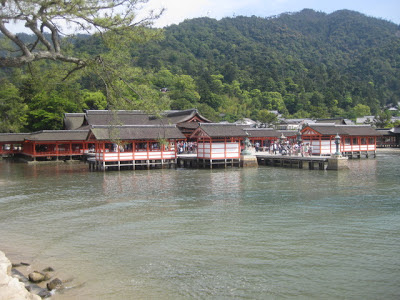
Itsukushima is an island in the western part of the Inland Sea of Japan, located in the northwest of Hiroshima Bay. It is popularly known as Miyajima the Shrine Island, best known for its famous "floating" O-torii gate. The shrine complex is listed as a UNESCO World Heritage Site and the Japanese government has designated several buildings and possessions as National Treasures. The area designated for World Heritage comprises of the 431 hectares including the Itsukushima Shrine, and the adjacent sea, and the Mt Misen Primeval Forest (National Treasure) to the rear.


The O-torii Gate is about 16 meters in height and weighs about 60 tons. The main pillars are 9.9 meters in circumference, and made of natural camphor trees, while the four supporting pillars are made of natural cedar. The present O-torii was erected in 1875, and the eighth since the Heian Period (the last division of classical Japanese history, running from 794 to 1185).

According to records, the shrine was established in the time of Empress Suiko. The warrior-courtier Taira no Kiyomori gave the shrine its present form. In 1555, Mōri Motonari defeated Sue Harukata at the Battle of Miyajima. Toyotomi Hideyoshi built a large building, the Senjō-kaku, on a hill above the shrine.


The first shrine buildings were probably erected in the 6th century, and the shrine has been destroyed many times. The present shrine dates from the mid-16th century, and follows the earlier 12th century design. That design was established in 1168, when funds were provided by the warlord Taira no Kiyomori.


The island of Itsukushima, including the waters around it (part of Seto Inland Sea), are within Setonaikai National Park. This sea is affected by strong tides. At low tide, the bottom of the sea is exposed past the island's O-torii. At high tide, the sea covers all the previously exposed mud and fills areas underneath the shrine.


The Itsukushima Shrine at high tide, when it appears to float on the water. The shrine was designed and built on pier-like structures over the bay so that it would appear to be floating on the water, separate from the sacred island, which could be approached by the devout.


Mt. Misen is the highest peak on Miyajima island, 535 meters above sea level. Since the year 806 it has attracted devout worshipers. The natural environment has been kept intact which creates magnificent scenery.

Mt. Misen Ropeway (unfortunately it was a rainy day)
The Miyajima Ropeway is a network of gondolas that traverse the island, which is rare and unique in Japan and is often described as walking in the sky.

Wait at the ropeway station platform between gondola changes
Kiezu-no-Reikado Hall is located about 20 minutes on foot from Shishiiwa Ropeway Station. The holy fire that Kobo Daishi lit for his ascetic training has been kept burning for over 1,200 years in Reikado Hall. The hall has been designated a "Lover:s Sanctuary" as the flame is akin to the eternal fire of love.

Kiezu-no-Reikado Hall


Tuesday, May 07, 2013

Akira Kurosawa - Rashomon


Rashomon is a 1950 Japanese drama directed by Akira Kurosawa. The film depicts the rape of a woman and the murder of her samurai husband through the widely differing accounts of four witnesses, including the bandit/rapist, the wife, the dead man (speaking through a medium), and lastly a woodcutter, the one witness that seems the most objective and least biased. Kurosawa when asked by his assistants to explain his script explained “Human beings are unable to be honest with themselves about themselves. They cannot talk about themselves without embellishing. This script portrays such human beings—the kind who cannot survive without lies to make them feel they are better people than they really are.”

Monday, April 29, 2013

Ken Burns - The Central Park Five


THE CENTRAL PARK FIVE, a new film from award-winning filmmaker Ken Burns, tells the story of the five black and Latino teenagers from Harlem who were wrongly convicted of raping a white woman in New York City’s Central Park in 1989. The film chronicles The Central Park Jogger case, for the first time from the perspective of these five teenagers whose lives were upended by this miscarriage of justice.


Watch The Central Park Five on PBS. See more from Central Park Five.


The Daily Show with Jon StewartMon - Thurs 11p / 10c
Ken Burns
www.thedailyshow.com
Daily Show Full EpisodesIndecision Political HumorThe Daily Show on Facebook


Friday, January 25, 2013

DNA Data Storage


Two British scientists have demonstrated a possible solution to future enormous data storage challenges by storing all of Shakespeare's sonnets on several small stretches of DNA. The four letters in DNA's alphabet — the nucleotides commonly abbreviated as A, C, G and T, are used to corrolate the same binary numbers address numbers 1010.

Shall I Encode Thee In DNA? Sonnets Stored On Doulbe Helix
NPR Morning Edition
Jan 24, 2013


Shakespeare's Sonnets, Encoded In DNA
NPR Talk of the Nation, Science Friday
Jan 26, 2013

Thursday, January 24, 2013

NOVA - Rise of the Drones


NOVA: Rise of the Drones
Aired January 23, 2013 on PBS

"Drones. These unmanned flying robots–some as large as jumbo jets, others as small as birds–do things straight out of science fiction. Much of what it takes to get these robotic airplanes to fly, sense, and kill has remained secret. But now, with rare access to drone engineers and those who fly them for the U.S. military, NOVA reveals the amazing technologies that make drones so powerful as we see how a remotely-piloted drone strike looks and feels from inside the command center. From cameras that can capture every detail of an entire city at a glance to swarming robots that can make decisions on their own to giant air frames that can stay aloft for days on end, drones are changing our relationship to war, surveillance, and each other. And it's just the beginning."


Watch Rise of the Drones on PBS. See more from NOVA.

Wednesday, January 23, 2013

Regenesis


Regenesis by George Church

Amazon.com


"Imagine a future in which human beings have become immune to all viruses, in which bacteria can custom-produce everyday items, like a drinking cup, or generate enough electricity to end oil dependency. Building a house would entail no more work than planting a seed in the ground. These scenarios may seem far-fetched, but pioneering geneticist George Church and science writer Ed Regis show that synthetic biology is bringing us ever closer to making such visions a reality.

In Regenesis, Church and Regis explorethe possibilities—and perils—of the emerging field of synthetic biology. Synthetic biology, in which living organisms are selectively altered by modifying substantial portions of their genomes, allows for the creation of entirely new species of organisms. Until now, nature has been the exclusive arbiter of life, death, and evolution; with synthetic biology, we now have the potential to write our own biological future. Indeed, as Church and Regis show, it even enables us to revisit crucial points in the evolution of life and, through synthetic biological techniques, choose different paths from those nature originally took."

Is Creating New Life — Maybe Even A Neanderthal — Possible?
January 23, 2013
NPR On Point with Tom Ashbrook

Tuesday, January 22, 2013

The Double V


The Double V: How Wars, Protest, and Harry Truman Desegregated America's Military
by Rawn James Jr.


NPR Fresh Air
'Double V': The Fight For Civil Rights In The U.S. Military
January 10, 2013

Amazon.com

"Executive Order 9981, issued by President Harry Truman on July 26, 1948, desegregated all branches of the United States military by decree. EO 9981 is often portrayed as a heroic and unexpected move by Truman. But in reality, Truman's history-making order was the culmination of more than 150 years of legal, political, and moral struggle. Beginning with the Revolutionary War, African Americans had used military service to do their patriotic duty and to advance the cause of civil rights. The fight for a desegregated military was truly a long war-decades of protest and labor highlighted by bravery on the fields of France, in the skies over Germany, and in the face of deep-seated racism on the military bases at home. Today, the military is one of the most truly diverse institutions in America. In The Double V, Rawn James, Jr.the son and grandson of African American veterans expertly narrates the remarkable history of how the struggle for equality in the military helped give rise to their fight for equality in civilian society. Taking the reader from Crispus Attucks to President Barack Obama, The Double V illuminates the African American military tradition as a metaphor for their unique and dynamic role in American history."


Tuesday, January 15, 2013

American Experience - The Abolitionists


Premiering January 8, 15, and 22 2013 on PBS. "Abolitionist allies Frederick Douglass, William Lloyd Garrison, Harriet Beecher Stowe, John Brown and Angelina Grimké turned a despised fringe movement against chattel slavery into a force that literally changed the nation."

Episode 1 - From Courage to Freedom
Episode 2 - Before Brother Fought Brother
Episode 3 - A House Dividing


Watch The Abolitionists on PBS. See more from American Experience.

Wednesday, December 26, 2012

My Neighbors the Yamadas


My Neighbors the Yamadas is a an extremely funny feature-length animated film directed by Isao Takahata released by Studio Ghibli July 17, 1999. This is the first Studio Ghibli film that was digitally produced without using cells. The movie captures Japanese daily life in a painted watercolor style accomplished by drawing three times the normal number of frames. The film plays like a series of comedy or sitcom episodes, many ending with a haiku poem. Released in the United States by Disney, I recommend watching the subtitled version, which captures the true spirit of the dialog in Japanese much better than the English dubbing and Hollywood character acting. 


Thursday, December 06, 2012

Planet Money #420: The Legal Marijuana Business


Last month, two states voted to legalize recreational marijuana. A bunch of others states have already legalized medical marijuana. Not surprisingly, there are legitimate, legal (at least under state law) marijuana entrepreneurs trying to start businesses around the country. On today's show, we discover the one big thing that's standing in their way: getting a bank account. And we learn how hard it is to run a business on cash alone.


NPR Morning Edition
It's Legal To Sell Marijuana in Washington. But try Telling That To A Bank.
November 16, 2012


John Davis, who runs a legal medical marijuana business in Washington state. He described one of the big hurdles of starting a legal marijuana business: It's really hard to get a bank account. His story reveals not only the gray area the marijuana business still inhabits (it's still illegal under federal law), but also just how hard it is to run a small business without a bank.

Here are four key steps Davis recommends, based on his own experience:

1. Buy three safes. One for "bulk product," one for "inventoried, ready-for-sale product," and one for cash. "If you put your cash in with the cannabis, it will end up smelling like cannabis, and when you go down to the bank, I guarantee you're going to have a talk with the manager of that bank."

2. Get an ATM — and be prepared to stock it with cash yourself. Credit card companies may not want to do business with you. Same goes for the companies that run ATMs in small businesses. "The companies that traditionally maintain ATMs will not stock your cash," Davis says. "Why? Because it's possible that the federal government will come, break down the door and take that cash."

3. Find angel investors. No bank is going to give you a loan to start a weed shop, even if it's legal.

4. Create a shell company. Banks don't want to do business with weed shops. But they don't mind opening accounts for legal corporations whose business dealings are vague. "I had to be colorful with the way that I opened my account," Davis said. "I don't feel great about having to toy with the truth, but it's essential for me to have banking. I'm a business."


Peter Tosh - Legalize It


Legalize It is an album and song by Peter Tosh. Legalize It was Tosh's debut album as a solo artist after leaving the Wailers. It was recorded at Treasure Isle and Randy's Kingston, Jamaica in 1975 and released in 1976.

Wednesday, December 05, 2012

TIny Structure Gives Big Boost to Solar Power


Princeton School of Applied and Applied Science

John Sullivan, December 5, 2012

"Princeton researchers have found a simple and economical way to nearly triple the efficiency of organic solar cells, the cheap and flexible plastic devices that many scientists believe could be the future of solar power.

The researchers, led by electrical engineer Stephen Chou, were able to increase the efficiency of the solar cells 175 percent by using a nano-structured "sandwich" of metal and plastic that collects and traps light. Chou said the technology also should increase the efficiency of conventional inorganic solar collectors, such as standard silicon solar panels, although he cautioned that his team has not yet completed research with inorganic devices."

Tuesday, December 04, 2012

Inventing Wine


Inventing Wine: A New History of One of the World's Most Ancient Pleasures
By Paul Lukacs


"Wine is our original alcoholic beverage. It dates back 8,000 years and, as Paul Lukacs writes in his new book, Inventing Wine: A New History of One of the World's Most Ancient Pleasures, was originally valued more because it was believed to be of divine origin than for its taste. And that's a good thing, Lukacs tells Fresh Air's Terry Gross, because early wine was not particularly good."

Monday, December 03, 2012

American Experience: The Rockefellers


American Experience: The Rockefellers
PBS Broadcast

For decades, the Rockefeller name was despised in America–associated with John D. Rockefeller Sr.'s feared monopoly, Standard Oil. By the end of his life, Rockefeller had given away half his fortune–but even his vast philanthropy could not erase the memory of his predatory business practices. His only son, John D. Rockefeller Jr., would dedicate his life to recasting the family image. In the quest for redemption and respectability, Junior would give away hundreds of millions of dollars, and would insist that his six children behave impeccably. Their contributions transformed America.


Rockefeller became the world's richest man and the first American worth more than a billion dollars. Adjusting for inflation, he is often regarded as the richest person in history. By the time of his death in 1937, estimates place his net worth in the range of US $392 billion to US $663.4 billion in adjusted dollars for the late 2000s, and it is estimated that his personal fortune was equal to 1.53% of the total U.S. annual GDP in his day.

Sunday, December 02, 2012

This American Life 479: Little War on the Prairie


This American Life: Little War on the Prairie
November 23, 2012

Growing up in Mankato, Minnesota, John Biewen says, nobody ever talked about the most important historical event ever to happen there: in 1862, it was the site of the largest mass execution in U.S. history. Thirty-eight Dakota Indians were hanged after a war with white settlers. John went back to Minnesota to figure out what really happened 150 years ago, and why Minnesotans didn’t talk about it much after.


Prologue

Ira talks to John Biewen about how remarkable it is that he could grow up in a town and never learn about the most significant event in its history. This show about Native Americans and settlers was first broadcast on Thanksgiving weekend, on the 150th anniversary of the war. (4 minutes)

Act One

John meets up with Gwen Westerman, a Dakota woman who moved to Mankato twenty years ago, also having no idea about its history. Together they travel to historic sites across Minnesota, reconstructing the story of what led to the war between the Dakota and the settlers. (25 minutes)

Act Two

John continues the story of the Dakota War of 1862, and how it resulted in the expulsion of the Dakota people from the state of Minnesota. Then John goes back to his hometown to see how this history is being taught today. He speaks with historian Mary Wingerd, author of North Country: The Making of Minnesota, about why so many people — including both of them — grew up in Minnesota and heard so little about the war. And he witnesses Dakota people, on the 150th anniversary of the war, crossing the state line and returning to Minnesota. (26 minutes)

Wednesday, November 21, 2012

A Sort of Homecoming


Time in my life when radical change is on the horizon, this song always makes sense to me.


And you know it's time to go
Through the sleet and driving snow
Across the fields of mourning
Light in the distance

And you hunger for the time
Time to heal, desire, time
And your earth moves beneath
Your own dream landscape

Oh, oh, oh...
On borderland we run...

I'll be there
I'll be there...
Tonight
A high road
A high road out from here

The city walls are all pulled down
The dust, a smoke screen all around
See faces ploughed like fields that once
Gave no resistance

And we live by the side of the road
On the side of a hill 
As the valley explode
Dislocated, suffocated
The land grows weary of it's own

Oh, oh, oh...on borderland we run...
And still we run
We run and don't look back
I'll be there
I'll be there
Tonight
Tonight

I'll be there tonight...I believe
I'll be there...somehow
I'll be there...tonight
Tonight

The wind will crack in winter time
This bomb-blast lightning waltz
No spoken words, just a scream...

Tonight we'll build a bridge 
Across the sea and land
See the sky, the burning rain
She will die and live again
Tonight

And your heart beats so slow
Through the rain and fallen snow
Across the fields of mourning
Light's in the distance

Oh don't sorrow, no don't weep
For tonight, at last
I am coming home
I am coming home

Wednesday, September 19, 2012

Frontline - The Battle for Syria


In Frontline's two-part special report broadcast Sep 18 2012, The Battle for Syria, FRONTLINE journeys to the heart of the Syrian insurgency, embedding with rebels who are waging a full-scale assault on Assad’s forces. But how organized are Syria’s opposition groups? What dangers might the conflict unleash? And what would it take to end it?

FRONTLINE turned to 10 experts — Syrian activists, journalists who have reported from the country’s dangerous front lines and analysts who specialize in the region — to explain the long-term impacts of Syria’s deadly conflict.

Part 1 - The Battle for Syria


Watch The Battle for Syria on PBS. See more from FRONTLINE.

Part 2 - The Regime Responds


Watch The Regime Responds on PBS. See more from FRONTLINE.

Tuesday, September 18, 2012

American Experience - Jimmy Carter


Jimmy Carter's story is one of the greatest dramas in American politics. In 1980, he was overwhelmingly voted out of office in a humiliating defeat. Over the subsequent two decades, he became one of the most admired statesmen and humanitarians in America and the world. Jimmy Carter, part of AMERICAN EXPERIENCE’s award-winning Presidents series, traces his rapid ascent in politics, dramatic fall from grace and unexpected resurrection.


Monday, September 10, 2012

Tokyo Mizube Line Water Bus Transportation


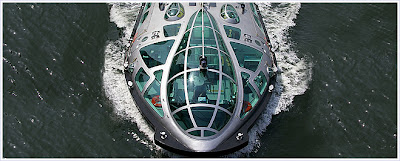
The Tokyo Mizube Line is water-bus transportation service, which navigates around the Sumida and the Arakawa rivers, Odaiba area and Kasai Rinkai Park. Other than general transportation service, they have many kinds of special cruising to enjoy Japanese events such as cherry blossom viewing in Spring and fireworks in Summer.

Himiko Interior
The Water Bus “Himiko” Produced by Leiji Matsumoto,one of the best renowned Japanese cartoonists.   “Himiko” is a completely unique water bus with its streamline shaped body with large windows. Himiko is named after Queen Himiko who was the first recognized independent lady in Japanese history.

Himiko Routes
Himiko runs from Asakusa to Odaiba Seaside Park, to Toyosu and then back to Asakusa. During the daytime the futuristic ship runs through old Edo and modern Tokyo while enjoying 360-degree panoramic view. At night the floor panels are lit up and emphasize the ship’s sophisticated design.

Hotaluna Cruise
Himiko has a promenade deck to enjoy the scenery outside the ship. At night the Hotaluna Cruise lights up the back of the window glass on the rear ship emitting a pale light emitted during evening and night, so that it lights up like a firefly. The name Hotaluna is a combination of  Hotaru  the Japanese word for 'firefly', and Luna the latin goddess of the moon. Reiji Matsumoto designed and named Hotaluna to represent a firefly shining mysteriously at night under the moon while travelling across the Sumida River".


Thursday, September 06, 2012

Why We Fight - 2006 Documentary Film


Why We Fight is 2006 Documentary film by Eugene Jarecki about the "military–industrial complex". The title refers to the World War II-era eponymous propaganda movies commissioned by the U.S. Government to justify their decision to enter the war against the Axis Powers. It describes the rise and maintenance of the United States military–industrial complex and its 50-year involvement with the wars led by the United States to date, especially its 2003 Invasion of Iraq. The documentary asserts that in every decade since World War II, the American public was misled so that the government (incumbent Administration) could take them to war and fuel the military-industrial economy maintaining American political dominance in the world.

Film below but no sound, need to turn on CC, or download via bitTorrent.

Tuesday, July 31, 2012

Mars Science Laboratory and Curiosity Rover

The MSL robotic mission to Mars will attempt to land a Mars rover called Curiosity on the surface of Mars, scheduled to land in Gale Crater on August 6, 2012. The rover's objectives include determining Mars' habitability, studying the Martian climate and geology, and collecting data for a future manned mission to Mars.

MSL Launch
The rover was launched from an Atlas V rocket from Cape Canaveral on November 26, 2011. 
The MSL mission has four scientific goals:
  • Determine whether Mars could ever have supported life
  • Study the climate of Mars
  • Study the geology of Mars
  • Plan for a human mission to Mars

Landing a large mass on Mars is a difficult challenge. The atmosphere is thick enough to prevent rockets being used to provide significant deceleration, as flying into the plume at supersonic speed is notoriously unstable. Also, the atmosphere is too thin for parachutes and aerobraking alone to be effective. The landing sequence alone requires six vehicle configurations, 76 pyrotechnic devices, the largest supersonic parachute ever built, and more than 500,000 lines of code.


The spacecraft will employ several systems in a precise order, where the entry, descent and landing sequence will break down into four parts.

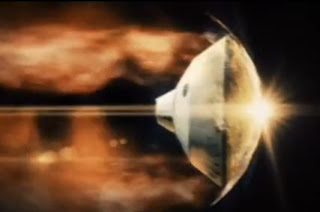
1. Guided entry: The rover is folded up within an aeroshell which protects it during the travel through space and during the atmospheric entry at Mars. Atmospheric entry is accomplished using a phenolic impregnated carbon ablator heat shield. The 4.5 m (15 ft) diameter heat shield, which will be the largest heat shield ever flown in space, reduces the velocity of the spacecraft by ablation against the Martian atmosphere, from the atmospheric interface velocity of approximately 5.8 km/s (3.6 mi/s) down to approximately 470 m/s (1,500 ft/s), where parachute deployment is possible about four minutes later. 


2. Parachute Descent: When the entry phase is complete and the capsule has slowed to Mach 2 and at about 10 km (6.2 mi) altitude, the Mars Science Laboratory will then deploy a supersonic parachute, as was done by previous landers such as Viking, Mars Pathfinder and the Mars Exploration Rovers. 

3. Powered Descent: Following the parachute braking, at about 1.8 km (1.1 mi) altitude, still travelling at about 100 m/s (220 mph), the rover and descent stage drop out of the aeroshell. The descent stage is a platform above the rover with 8 variable thrust mono propellant hydrazine rocket thrusters on arms extending around this platform to slow the descent. 

4. Sky Crane: To prevent the retrorockets from forming a dust cloud that could damage the rover's instruments, the sky crane system will lower the rover with a 65 foot tether to a soft landing, wheels down on the surface of Mars.


NASA's Seven Minutes of Terror: Curiosity's precarious Mars landing explained (video)