Showing posts with label BBC. Show all posts

Sunday, November 11, 2018

Quark Science


I found this documentary series quite fascinating and totally trans formative views of our world through the eyes of science.  I like how they include the mathematical equations that lead to the conclusions the the theories are based on and ultimately proven. Then leading to the next. Now one of my favorite science documentary series next to Cosmos and NOVA's 'Great Math Mystery', 'Life's Rocky Start'. All totally interrelate. 

Amazon Prime:

'Quark Science is a collection of episodes that answer some of humankind's most complicated questions: Where did we come from? What is the smallest particle? What actually drives the universe? Team up with the world's leading scientists to uncover the answers to these complex yet fascinating questions.'

Episode 1: The Amazing World of Gravity
Episode 2: Everything and Nothing
Episode 3: Order and Disorder
Episode 4: The Secret Life of Chaos (my favorite)

Wednesday, November 26, 2014

BBC - The Planets


BBC The Planets is a 7-hour miniseries produced by the BBC and A&E and released in 1999. It documents the Solar System and its nature, formation, and discovery by humans during the space age. The series of eight episodes includes a substantial amount of archival footage from both the United States and Soviet space programs. It also depicts the Solar System through computer graphics.

Links to full episodes streaming video on Dailymotion, below:

Episode 1: Different World - The first episode covers the early attempts at space travel and the development of rocket technology.

Episode 2: Terra Firma - The story of the terrestrial planets and their exploration.

Episode 3 : Giants Looking at the giant planets of Jupiter, Saturn, Uranus and Neptune and the journeys of Voyager 1 and Voyager 2.

Episode 4 : Moon - Detailing the moon and the race to reach it during the "Space race" years.

Episode 5 : Star - Concentrating on the Sun, the early belief in it being a god and the science behind its behavior.

Episode 6: Atmosphere - A look at the atmosphere of our planet and those in the rest of the Solar System.

Episode 7: Life - A journey into looking for life on other planets and trying to find if life elsewhere really does exist

Episode 8: Destiny - The final episode explores the future of the solar system, plus research into extrasolar planets.

Tuesday, August 30, 2011

BBC: First Life with David Attenborough


From the fog bound coastline of Newfoundland to the deserts of North Africa and the rainforests of Queensland, in BBC's First Life David Attenborough finds evidence in fossils and living animals of an extraordinary period in Earth’s history, half a billion years ago, when animals first appeared in the oceans. From the first eyes that saw, to the first predators that killed and the first legs that walked on land, these were creatures that evolved the traits and tools that allow all animals, including us, to survive to this day.

This is a story that can only be told now because in the last few years, stunning fossil finds at sites across the world have transformed our understanding of the first life forms, and the latest technology allows us to recreate the first animals and their environments with photo-realistic CGI.


Thursday, January 13, 2011

BBC - How Earth Made Us

How Earth Made Us
Presented by Professor Iain Stewart describing untold stories of history. Our planet has amazing power, and yet that's rarely mentioned in our history books. This series tells the story of how the Earth has influenced human history, from the dawn of civilization to the modern industrial age. It reveals for the first time on television how geology, geography and climate have been a far more powerful influence on the human story than has previously been acknowledged. A combination of epic story telling, visually stunning camera work, extraordinary locations and passionate presenting combine to form a highly original version of human history.

Discover why societies have succeeded or failed, and how the environment has influenced every aspect of our history from art to industry, religion to war, world domination or collapse. Visiting some of the most iconic places on Earth, How Earth Made Us overturns preconceptions about our civilizations and our cultures to offer a new perspective on who we are today.

1. Deep Earth
2. Water
3. Wind
4. Fire
5. Human Planet

BBC - Earth The Power of the Planet

BBC Earth The Power of the Planet

Dr Iain Stewart tells the story of how Earth works and how, over the course of 4.6 billion years, it came to be the remarkable place it is today.

1. Volcano
2. Atmosphere
3. Ice
4. Oceans
5. Rare Earth

BBC - The Story of India with Michael Wood


The Story of India is a BBC TV documentary series, written and presented by historian Michael Wood, about the 10,000-year history of the Indian subcontinent in six episodes.

Episode 1 - "Beginnings"

Travels through the subcontinent, tracing the richness and diversity of its peoples, cultures and landscapes. Through ancient manuscripts and oral tales Wood charts the first human migrations out of Africa. He travels from the tropical backwaters of South India through lost ancient cities in Pakistan to the vibrant landscapes of the Ganges plain, also attempts to re-create soma, an ancient drink recorded in the Rig Veda.

Episode 2 - "The Power of Ideas"

Episode moves on to the revolutionary years after 500BC - the Age of the Buddha and Mahavira. Travelling by rail to the ancient cities of the Ganges plain, by army convoy through Northern Iraq, and down Pakistan's Khyber Pass, how Alexander the Great’s invasion of India inspired its first major empire in the form of the Maurya kingdom.

Episode 3 - "Spice Routes and Silk Roads"

Episode traces India in the days of the Roman Empire. In Kerala the spice trade opened India to the world, whilst gold and silk bazaars in the ancient city of Madurai were a delight for visiting Greek traders. The Kushan Empire of Northern India that opened up the Silk Route and at Peshawar built a lost Wonder of the World.

Episode 4 - "Ages of Gold"

The achievements of the country’s golden age, including how India discovered zero, calculated the circumference of the Earth and wrote the world’s first sex guide, the Kama Sutra. In the south, the giant temple of Tanjore built by emperor Rajaraja Chola and traditional bronze casters, working as their ancestors did 1,000 years ago are shown. Michael Wood calls Tamil Nadu, "The only surviving 'Classical Civilization' in the world that’s the last living classical Indian language older than any modern European language.

Episode 5 - "The Meeting of Two Oceans"

Charts the coming of Islam to the subcontinent and one of the greatest ages of world civilisation: visits Sufi shrines in Old Delhi, desert fortresses in Rajasthan and the cities of Lahore and Agra, theory on the design of the Taj Mahal.

Episode 6 - "Freedom and Liberation"

South India a global corporation came to control much of the subcontinent, and explores the magical culture of Lucknow, discovering the enigmatic Briton who helped found the freedom movement. He traces the Amritsar massacre, the rise of Gandhi and Nehru, and the events that led to the Partition of India in 1947.


Monday, October 04, 2010

BBC Planet Earth


Planet Earth is a 2006 television series produced by the BBC Natural History Unit narrated by David Attenborough. Five years in the making, it was the most expensive nature documentary series by the BBC, and also the first to be filmed in high definition. The series was co-produced by the Discovery Channel and NHK in association with CBC, and was described by its makers as "the definitive look at the diversity of our planet".

Planet Earth was first broadcast in the United Kingdom on BBC One in March 2006, and premiered one year later in the USA on the Discovery Channel. By June 2007, it had been shown in 130 countries worldwide. For Discovery Sigourney Weaver's voiceover replaced Attenborough.

The series comprises eleven episodes, each of which features a global overview of a different habitat on Earth.

Episodes

1. From Pole to Pole
2. Mountains
3. Fresh Water
4. Caves
5. Deserts
6. Ice Worlds
7. Great Plains
8. Jungles
9. Shallow Seas
10. Seasonal Forests
11. Ocean Deep


Friday, August 13, 2010

BBC Yellowstone


Yellowstone is a BBC nature documentary series broadcast from 15 March 2009. Narrated by Peter Firth, the series takes a look at a year in the life of Yellowstone National Park, examining how its wildlife adapts to living in one of the harshest wildernesses on Earth.

Episodes:

1. "Winter"
2. "Summer"
3. "Autumn"

Its been described the series as "amazingly shot" and a "work of art". The Times gave it five out of five, and TV Scoop described it as "majestic yet understated and consistently surprising". At the 2009 Jackson Hole Wildlife Film Festival, Yellowstone gained the Best Series Award, and "Winter" gained the Best Wildlife Habitat Program award. It was also a finalist in the Best Cinematography category. At the 2009 International Wildlife Film Festival Awards, the series won the Best Cinematography and Best Ecosystem awards, and gained Merit Awards for Editing and Sound Design. 


Monday, June 15, 2009

The Incredible Human Journey


The Incredible Human Journey is a five-episode science documentary presented by Alice Roberts first broadcast on BBC television in May and June 2009 in the United Kingdom. It considers the evidence for and against the theory of early human migrations out of Africa and subsequently around the world.

Episode 1 "Out of Africa"
Episode 2 "Asia"
Episode 3 "Europe"
Episode 4 "Australia"
Episode 5 "Americas"

Monday, January 01, 2007

Poincaré conjecture


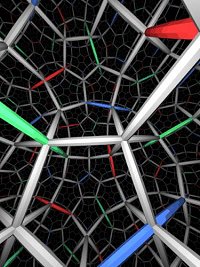
In mathematics, the Poincaré conjecture is a conjecture about the characterization of the three-dimensional sphere amongst three-dimensional manifolds. The conjecture concerns a space that locally looks like ordinary three dimensional space but is finite in size and lacks any boundary (a closed 3-manifold). The conjecture claims that if such a space has the additional property that each loop in the space can be continuously tightened to a point, then it is just a three-dimensional sphere. An analogous result has been known in higher dimensions for some time.

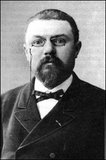
If we stretch a rubber band around the surface of an apple, then we can shrink it down to a point by moving it slowly, without tearing it and without allowing it to leave the surface. On the other hand, if we imagine that the same rubber band has somehow been stretched in the appropriate direction around a doughnut, then there is no way of shrinking it to a point without breaking either the rubber band or the doughnut. We say the surface of the apple is "simply connected," but that the surface of the doughnut is not. Poincare, almost a hundred years ago, knew that a two dimensional sphere is essentially characterized by this property of simple connectivity, and asked the corresponding question for the three dimensional sphere (the set of points in four dimensional space at unit distance from the origin). This question turned out to be extraordinarily difficult, and mathematicians have been struggling with it ever since.

Solving an Old Math Problem Nets Award, Trouble (audio)
NPR All Things Considered December 26, 2006


In our time (audio)
BBC.org November 2, 2006

The Mathematical Genius Behind the Problem
NPR.org, August 22, 2006

Not Feeling the Fields

Grisha Perelman becomes the first person ever to turn down math's top prize.
seedmagazine.com August 25, 2006

Mathematician Declines Top Prize (audio)
Morning Edition, August 22, 2006


Mathematician May Have Solved 100-Year-Old Problem (audio)
Weekend Edition Saturday, July 29, 2006