"My time, just the moment between the pillow and sleep,
Vacations spent working elsewhere,
When I could be sleeping,
Sitting is a luxury, only dreams are my refuge"
"Eight days, three hours, 18 minutes, 35 seconds. That is the total duration of the most important and celebrated space mission ever flown - Apollo 11 - when humans first set foot on the moon. It was a journey that changed the way we think about our place in the universe. But we only saw a fraction of what happened - a handful of iconic stills and a few precious hours of movie footage. Now it is time to discover the full story."
PBS, July 10, 2019 Back to the Moon "On the 50th anniversary of the historic Apollo 11 Moon landing, NOVA looks ahead to the hoped-for dawn of a new age in lunar exploration. This time, governments and private industry are working together to reach our nearest celestial neighbor. But why go back? The Moon can serve as a platform for basic astronomical research; as an abundant source of rare metals and hydrogen fuel; and ultimately as a stepping stone for human missions to Mars and beyond. Join the next generation of engineers that aim to take us to the Moon, and discover how our legacy of lunar exploration won't be confined to the history books for long."
“Chasing the Moon,” a film by Robert Stone, reimagines the race to the moon for a new generation, upending much of the conventional mythology surrounding the effort. The series recasts the Space Age as a fascinating stew of scientific innovation, political calculation, media spectacle, visionary impulses and personal drama..."
I found this documentary series quite fascinating and totally trans formative views of our world through the eyes of science. I like how they include the mathematical equations that lead to the conclusions the the theories are based on and ultimately proven. Then leading to the next. Now one of my favorite science documentary series next to Cosmos and NOVA's 'Great Math Mystery', 'Life's Rocky Start'. All totally interrelate.
'Quark Science is a collection of episodes that answer some of humankind's most complicated questions: Where did we come from? What is the smallest particle? What actually drives the universe? Team up with the world's leading scientists to uncover the answers to these complex yet fascinating questions.'
Episode 1: The Amazing World of Gravity
Episode 2: Everything and Nothing
Episode 3: Order and Disorder
Episode 4: The Secret Life of Chaos (my favorite)
In mathematics, the Fibonacci numbers are the numbers in the following integer sequence, called the Fibonacci sequence, and characterized by the fact that every number after the first two is the sum of the two preceding ones:
The sequence Fn of Fibonacci numbers is defined by the recurrence relation:
On August 21, 2017, millions of Americans witnessed the first total solar eclipse to cross the continental United States in 99 years. As in all total solar eclipses, the moon blocked the sun and revealed its ethereal outer atmosphere – its corona – in a wondrous celestial spectacle. While hordes of citizens flocked to the eclipse’s path of totality, scientists, too, staked out spots for a very different reason: to investigate the secrets of the sun’s elusive atmosphere. During the eclipse’s precious seconds of darkness, they gathered new clues on how our sun works,
The North–South Rail Link is a proposed pair of rail tunnels, each about 1.5 miles (2.4 km) long, that would connect North and South Stations in downtown Boston, Massachusetts.
The tunnels would better link Amtrak's various trains into and out of the city, but would mainly benefit the MBTA Commuter Rail by connecting its northern and southern lines. Currently, the Amtrak Downeaster line from Maine has no direct connection to the Northeast Corridor routes south and west. Both Amtrak and the commuter rail lines currently terminate at North and South Stations.
Handle is a research robot that stands6.5 ft tall, travels at 9 mph and jumps 4 feet vertically! It uses electric power to operate both electric and hydraulic actuators, with a range of about 15 miles on one battery charge. Handle uses many of the same dynamics, balance and mobile manipulation principles found in the quadruped and biped robots we build, but with only about 10 actuated joints, it is significantly less complex. Wheels are efficient on flat surfaces while legs can go almost anywhere: by combining wheels and legs Handle can have the best of both worlds. Imagine, this used to be only seen in a movie using special effects. But this thing is real, and not tethered! The video gave me a sense of awe, and a bit of 'yikes'. Welcome to the future. A matter of time until one of these gets armed with a weapon.
Engineers are using origami to design drugs, micro-robots, and future space missions.
The centuries-old tradition of folding two-dimensional paper into three-dimensional shapes is inspiring a scientific revolution. The rules of folding are at the heart of many natural phenomena, from how leaves blossom to how beetles fly. But now, engineers and designers are applying its principles to reshape the world around us—and even within us, designing new drugs, micro-robots, and future space missions. With this burgeoning field of origami-inspired-design, the question is: can the mathematics of origami be boiled down to one elegant algorithm—a fail-proof guidebook to make any object out of a flat surface, just by folding? And if so, what would that mean for the future of design? Explore the high-tech future of this age-old art as NOVA unfolds “The Origami Revolution.”
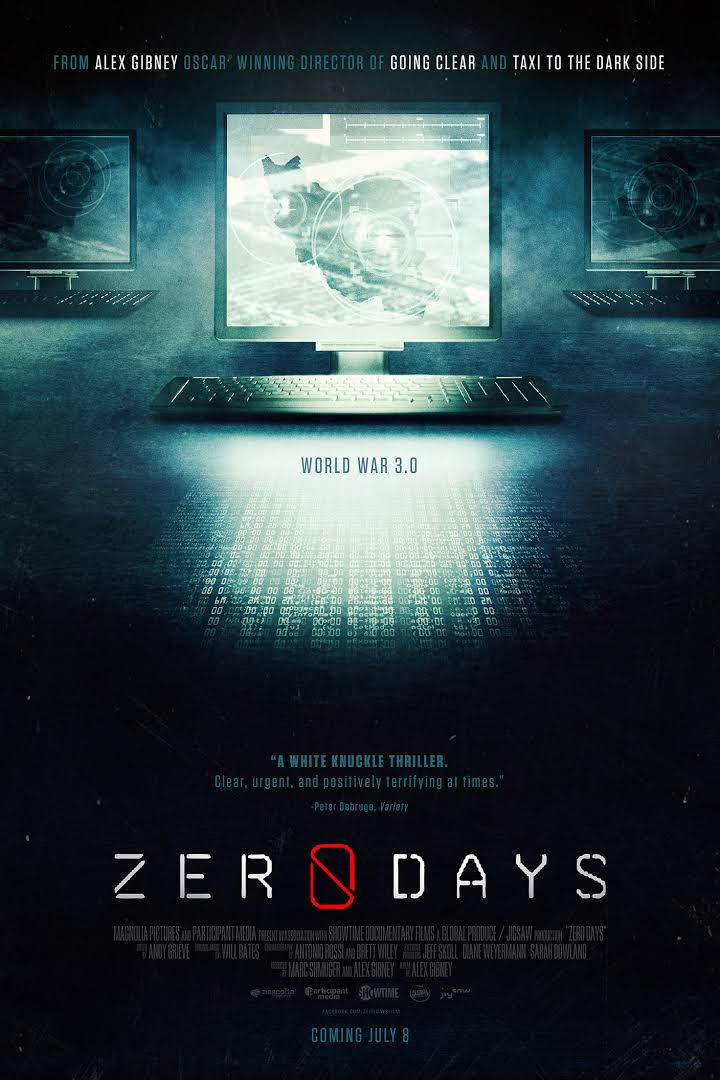
Zero Days is a 2016 American documentary film directed by Alex Gibney. Zero Days covers the phenomenon surrounding the Stuxnet computer virus and the development of the malware software known as "Olympic Games."
Saturday, October 29, 2016
Oct 28, 2016, during a press event at Universal Studios in L.A., Elon Musk announces that Tesla will build and sell its own line of solar panels with integrated batteries. Coupled with the also unveiled PowerWall 2, it will allow residential homeowners to replace their entire roof with solar panels, making it much simpler for homes to be entirely powered by solar power.
DARPA Director Dr. Arati Prabhakar to the President's Council of Advisors on Science and Technology (PCAST) about DARPA's mission and priorities.
Washington, DC
November 14, 2014
DARPA’s Airborne Launch Assist Space Access program (ALASA)
Launches 100-pound satellites into low Earth orbit within 24 hours of call-up, for less than $1 million per launch.
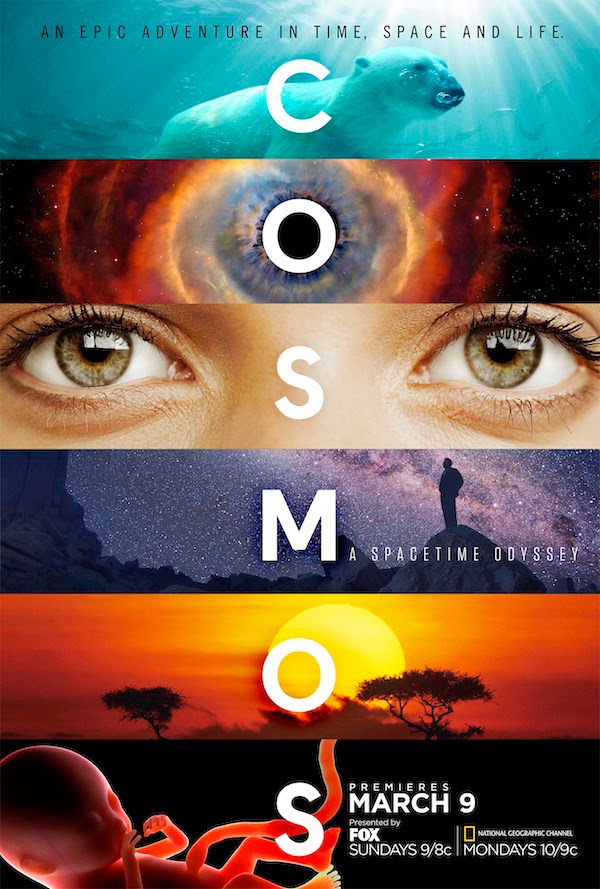
Cosmos: A Spacetime Odyssey explores how we discovered the laws of nature and found our coordinates in space and time. It will bring to life never-before-told stories of the heroic quest for knowledge and transport viewers to new worlds and across the universe for a vision of the cosmos on the grandest scale.
Episode 1 "Standing Up in the Milky Way"
Episode 2 "the Things That Molecules Do"
Episode 3 "When Knowledge Conquered Fear"
Episode 4 "A Sky Full of Ghosts"
Episode 5 "Hiding in the Light"
Episode 6 "Deeper, Deeper, Deeper Still"
Episode 7 "The Clean Room"
Episode 8 "Sisters of the Sun"
Episode 9 "The Electric Boy"
Episode 10 "The Lost Worlds of Planet Earth"
Episode 11 "The Immortals"
Episode 12 "The World Set Free"
Episode 13 "Unafraid of the Dark"
Cosmos: A Personal Voyage is a thirteen-part television series by Sagan also as presenter. The series was first broadcast by the Public Broadcasting Service in 1980, and was the most widely watched series in the history of American public television until The Civil War (1990).
"Princeton researchers have found a simple and economical way to nearly triple the efficiency of organic solar cells, the cheap and flexible plastic devices that many scientists believe could be the future of solar power.
The researchers, led by electrical engineer Stephen Chou, were able to increase the efficiency of the solar cells 175 percent by using a nano-structured "sandwich" of metal and plastic that collects and traps light. Chou said the technology also should increase the efficiency of conventional inorganic solar collectors, such as standard silicon solar panels, although he cautioned that his team has not yet completed research with inorganic devices."