Monday, March 12, 2007

Half-Life 2, Episode Two: Team Fortress 2


Half-Life 2: Episode Two


Valve, developer of the blockbuster series Half-Life and Counter-StrikeTM, unveiled Team Fortress 2 to be included in its next release, Half-Life 2: Episode Two. In addition, the studio announced its plans to deliver it for the PC, Xbox 360 and PlayStation 3.


Team Fortress 2

Team Fortress 2, an all-new version of the title that spawned team based multiplayer action games, features the most advanced graphics of any Source-based game released to date. Players choose from a range of unique character classes such as medic, spy, sniper, or engineer and must work together to complete a variety of tactical objectives.


Team Fortress 2 and Portal will be included with all retail and Steam versions of Episode Two for the PC. In addition, these products plus Half-Life 2 and Episode One will be available in one tremendous offering for the PC, Xbox 360 and PlayStation 3. New videos from Episode Two, Portal, and Team Fortress 2 will be released next week.


Team Fortress 2 Trailer: (xboxyde.com)

http://www.xboxyde.com/stream_2943_en.html


Wikipedia - Team Fortress 2:

Just like its predecessor, Team Fortress 2 players will be able to choose to play as one of several archetypal classes at the start of a match, each with its own unique strengths and weaknesses. While it is unknown if the abilities of each class will be similar to the original Team Fortress, all indications so far are that the basic elements will remain the same: Heavy Weapons characters will have huge guns with incredible firepower but will have a slow walking speed, scouts will be able to move very quickly, but are lightly armoured, and so on. While it is unclear at this time what sort of game types will be included upon release, capture the flag and control point matches are likely to return.

Team Fortress 2 will not opt for the realistic graphical approaches taken by the official Valve games Day of Defeat and Counter-Strike. Rather, it will use a more stylized, cartoon-like approach. The effect seems to have been achieved using a special Valve in-house rendering and lighting technique making extensive use of Phong shading [3]. The game will debut the Source engine's new dynamic lighting, shadowing and soft particle technologies, among many other unannounced features, alongside Half-Life 2: Episode Two. It should be noted however, that the depth of field and motion blur effects seen in the game's trailers cannot feasibly be rendered during gameplay[4] unless inferior approximations, such as vector motion blur or image -space depth of field, were to be used.


A collage of the Team Fortress 2 player classes in action. Top row: (left to right) Demoman, Engineer, Heavy; Middle row: (left to right) Medic, Pyro, Scout; Bottom row: (left to right) Sniper, Soldier, Spy.

Thursday, March 08, 2007

The Message


The Message

It's like a jungle sometimes
It makes me wonder how I keep from goin' under
It's like a jungle sometimes
It makes me wonder how I keep from goin' under

Broken glass everywhere
People pissin' on the stairs, you know they just don't care
I can't take the smell, can't take the noise
Got no money to move out, I guess I got no choice
Rats in the front room, roaches in the back
Junkies in the alley with a baseball bat
I tried to get away but I couldn't get far
'cuz a man with a tow truck repossessed my car

Don't push me 'cuz I'm close to the edge
I'm trying not to lose my head
Uh huh ha ha ha
It's like a jungle sometimes
It makes me wonder how I keep from goin' under


Grandmaster Flash and the Furious Five Rock and Roll Hall of Fame Induction Year: 2007

Grandmaster Flash and the Furious Five fomented the musical revolution known as hip-hop. Theirs was a pioneering union between one DJ and five rapping MCs. Grandmaster Flash (born Joseph Saddler) not only devised various techniques but also designed turntable and mixing equipment. Formed in the South Bronx, Grandmaster Flash and the Furious Five were one of the first rap posses, responsible for such masterpieces as “The Message,” “Grandmaster Flash on the Wheels of Steel” and “White Lines.” The combination of Grandmaster Flash’s turntable mastery and the Furious Five’s raps, which ranged from socially conscious to frivolously fun, made for a series of 12-inch records that forever altered the musical landscape.

Flash, along with DJ Kool Herc and Afrika Bambaataa, pioneered the art of break-beat deejaying—the process of remixing and thereby creating a new piece of music by playing vinyl records and turntables as if they were musical instruments. Disco-era deejays like Pete “DJ” Jones, an early influence on Grandmaster Flash, spun records so that people could dance. Turntablists took it a step further by scratching and cutting records, focusing on “breaks”—what Flash described as “the short, climactic parts of the records that really grabbed me”—as a way of heightening musical excitement and creating something new.

Rock and Roll Hall of Fame Inductees:

A permanent Museum exhibit that celebrates the lives and work of Hall of Fame inductees.
The Rock and Roll Hall of Fame honors the legendary performers, producers, songwriters, disc jockeys and others who have made rock and roll the force that it is in our culture.

Thursday, March 01, 2007

American Experience: Citizen King


Citizen King
American Experience, PBS.org

About the film

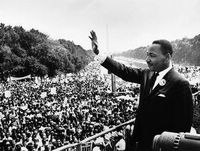
President Johnson Meeting With Civil Rights Leaders The story begins on the steps of the Lincoln Memorial in August 1963, when a 34-year-old preacher galvanized millions with his dream for an America free of racism. It comes to a bloody end almost five years later, on a motel balcony in Memphis, Tennessee.

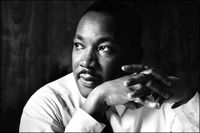
In the years since those events unfolded, the man at their center, Dr. Martin Luther King Jr., has become a mythic figure, a minister whose oratory is etched into the minds of millions of Americans, a civil rights activist whose words and image are more hotly contested, negotiated and sold than almost anyone else's in American history.



Video: Three Perspectives: Dr. King, Malcolm X and James Baldwin talk about race relations

Boston public television producer Henry Morgenthau III's "The Negro and the American Promise," featuring interviews with Martin Luther King, Malcolm X, and James Baldwin, made headlines in spring 1963. The program aired in a climate of racial conflict, just months after Alabama governor George Wallace's defiant support of "segregation forever," and before the March on Washington.

The New York Times described the James Baldwin segment as "a television experience that seared the conscience." A viewer wrote of the Malcolm X segment that he was shocked "that such a blatant display of racial prejudice could be aired."


"An eye for an eye makes the whole world blind"

Mahatma Gandhi

Wednesday, January 03, 2007

Buffalo Soldiers


Buffalo Soldiers


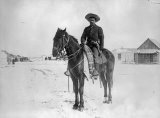
The nickname originally applied to the members of the U.S. 10th Cavalry Regiment of the United States Army, which was formed on September 21, 1866 at Fort Leavenworth, Kansas.


The term eventually encompassed these units:

* U.S. 9th Cavalry Regiment
* U.S. 10th Cavalry Regiment
* U.S. 24th Infantry Regiment
* U.S. 25th Infantry Regiment

Although several black regiments were raised during the Civil War to fight alongside the Union Army (including the famous 54th Massachusetts Volunteer Infantry and the many United States Colored Troops Regiments), the "Buffalo Soldiers" were established by Congress as the first peacetime all-black regiments in the regular U.S. Army.

On September 6, 2005, Mark Matthews, who was the oldest living Buffalo Soldier, died at the age of 111. He was buried at Arlington National Cemetery.


Buffalo Soldier History
Buffalo Solider National Museum
Buffalo Solider Monument

Colonel Benjamin Grierson formed the 10th Cavalry on 21 September 1866 at Fort Leavenworth, Kansas. It, along with the 9th Cavalry, 24th and 25th Infantry, formed the first all-black regiments in the Regular United States Army. In western Kansas, the Kiowa encountered the soldiers of the 10th as valiant opponents and termed them the "Buffalo Soldiers." In time, the term designated all of the black soldiers in all four regiments. The Buffalo Solders left Fort Leavenworth to win repeated honors on the plains and in the west. In 1898 the Buffalo Soldiers fought in Cuba winning praise from Theodore Roosevelt and his Rough Riders for their critical role in the battle for Santiago. The Buffalo Soldiers also served on the Mexican border before the American entry into the First World War.


Buffalo Soldier
Bob Marley

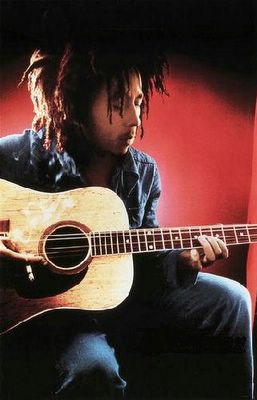
Buffalo Soldier, dreadlock rasta
There was a Buffalo Soldier in the heart of America,
Stolen from Africa, brought to America,
Fighting on arrival, fighting for survival.

If you know your history,
Then you would know where you coming from,
Then you wouldn't have to ask me,
Who the 'eck do I think I am.

I'm just a Buffalo Soldier in the heart of America,
Stolen from Africa, brought to America,
Said he was fighting on arrival, fighting for survival;
Said he was a Buffalo Soldier in the war for America.

Dreadie, woy yoy yoy, woy yoy-yoy yoy,
Woy yoy yoy yoy, yoy yoy-yoy yoy!

Buffalo Soldier troddin' through the land, wo-ho-ooh!
Said he wanna ran, then you wanna hand,
Troddin' through the land, yea-hea, yea-ea.

Said he was a Buffalo Soldier win the war for America;
Buffalo Soldier, dreadlock rasta,
Fighting on arrival, fighting for survival;
Driven from the mainland to the heart of the Caribbean.

Dreadie, woy yoy yoy, woy yoy-yoy yoy,
Woy yoy yoy yoy, yoy yoy-yoy yoy!

Monday, January 01, 2007

Poincaré conjecture


In mathematics, the Poincaré conjecture is a conjecture about the characterization of the three-dimensional sphere amongst three-dimensional manifolds. The conjecture concerns a space that locally looks like ordinary three dimensional space but is finite in size and lacks any boundary (a closed 3-manifold). The conjecture claims that if such a space has the additional property that each loop in the space can be continuously tightened to a point, then it is just a three-dimensional sphere. An analogous result has been known in higher dimensions for some time.

If we stretch a rubber band around the surface of an apple, then we can shrink it down to a point by moving it slowly, without tearing it and without allowing it to leave the surface. On the other hand, if we imagine that the same rubber band has somehow been stretched in the appropriate direction around a doughnut, then there is no way of shrinking it to a point without breaking either the rubber band or the doughnut. We say the surface of the apple is "simply connected," but that the surface of the doughnut is not. Poincare, almost a hundred years ago, knew that a two dimensional sphere is essentially characterized by this property of simple connectivity, and asked the corresponding question for the three dimensional sphere (the set of points in four dimensional space at unit distance from the origin). This question turned out to be extraordinarily difficult, and mathematicians have been struggling with it ever since.

Solving an Old Math Problem Nets Award, Trouble (audio)
NPR All Things Considered December 26, 2006


In our time (audio)
BBC.org November 2, 2006

The Mathematical Genius Behind the Problem
NPR.org, August 22, 2006

Not Feeling the Fields

Grisha Perelman becomes the first person ever to turn down math's top prize.
seedmagazine.com August 25, 2006

Mathematician Declines Top Prize (audio)
Morning Edition, August 22, 2006


Mathematician May Have Solved 100-Year-Old Problem (audio)
Weekend Edition Saturday, July 29, 2006


Thursday, December 21, 2006

Rebel Music: The Bob Marley Story


Rebel Music The Bob Marley Story home - PBS.org

download "RebelMusic" via bittorrent (requires bittorrent client)


amazon.com

This video offers a portrait of a musician, who, in reality, was much more than that. The first third-world figure to achieve lasting musical fame, Robert Nesta Marley was as much prophet and politician as he was a musician. This video traces the course of this man's remarkable career, liberally sprinkled with interviews with the man himself and the people who knew him. Much archival footage of Marley's performances is included, including some never before seen. ~ Rob Ferrier, All Movie Guide

Akira Kurosawa's Dreams


Dreams - en.wikipedia.org

download "Dreams" via bittorrent (requires bittorrent client)


en.wikipedia.org

Dreams — aka Akira Kurosawa's Dreams, Yume (夢), I Saw a Dream Like This, Konna yume wo mita, or Such Dreams I Have Dreamed — is a 1990 portmanteau film based on actual dreams of the film's director, Akira Kurosawa at different stages of his life. The film is based more on imagery than on dialogue.

Grave of the Fireflies


Grave of the Fireflies - en.wikipedia.org

download "Grave of the Fireflies" via bittorrent (requires bittorrent client)


en.wikipedia.org

Grave of the Fireflies (火垂るの墓, Hotaru no Haka?) is a 1988 anime movie written and directed by Isao Takahata for Shinchosha. This is the first film produced by Shinchosha, who hired Studio Ghibli to do the animation production work. It is an adaptation of the semi-autobiographical novel of the same name by Akiyuki Nosaka, intended as a personal apology to the author's own sister.

Some critics—most notably Roger Ebert—consider it to be one of the most powerful anti-war movies ever made. Animation historian Ernest Rister compares the film to Steven Spielberg's Schindler's List and says, "it is the most profoundly human animated film I've ever seen."

American Experience - Summer of Love


pbs.org

American Experience presents Summer of Love, a striking picture of San Francisco's Haight Ashbury district during the summer of 1967 -- from the utopian beginnings, when peace and love prevailed, to the chaos, unsanitary conditions, and widespread drug use that ultimately signaled the end. Academy Award-nominated filmmakers Gail Dolgin and Vicente Franco (Daughter from Danang) examine the social and cultural forces that sparked the largest migration of young people in America's history.

"Many of these idealistic youth were products of the 1950s with its confusing mix of post-war affluence and the threat of nuclear annihilation," says Dolgin. "San Francisco, in 1967, seemed like mecca, the center of a visionary new society, one that rejected war, hatred, conformity and money. The Haight Ashbury, for a brief period, was the playing field for a new way of life."


American Experience - Summer of Love home - PBS.org

Frontline: Jesus to Christ: The First Christians


This FRONTLINE series is an intellectual and visual guide to the new and controversial historical evidence which challenges familiar assumptions about the life of Jesus and the epic rise of Christianity.

For an overview of the series read the Synopsis. It includes links to some of the stories and material on this web site which expand the narrative.

This site is anchored by the testimony of New Testament theologians, archaeologists and historians who serve as both critics and storytellers. They address dozens of key issues, disagreements and critical problems relating to Jesus' life and the evolution of Christianity. Throughout the site, maps, charts (for example, the fortress of Masada), ancient texts (including Perpetua's diary), pictures of the archaeological discoveries, ancient imagery, and audio excerpts from the television program complement and illuminate the scholars' commentary.

A new addition to this site is the edited transcript of a two-day symposium at Harvard University. This symposium was a follow-up to the FRONTLINE broadcast and featured scholars' presentations, workshops and audience discussion.

Part 1


Watch the full episode. See more FRONTLINE.

Part 2


Watch the full episode. See more FRONTLINE.

American Experience - Fidel Castro


Amazon.com

Fidel Castro has survived U.S. hostility, an invasion, several CIA assassination attempts and an economic embargo. His face has become an iconic image worldwide, yet the man himself remains an enigma to all but a few. Through interviews with relatives, childhood friends, fellow rebel leaders, Bay of Pigs veterans, human rights activists and journalists, this program constructs an intimate portrait of the most resilient of leaders.


American Experience: Fidel Castro home - PBS.org


Slavery and the Making of America


Slavery and the Making of America home - PBS.org

download "Slavery and the Making of America" via bittorrent (requires bittorrent client)


en.wikipedia.com

Underscoring how slavery impacted the growth of this country's Southern and Northern states; the series examines issues still relevant today. The variety of cultures from which the slaves originated provided the budding states with a multitude of skills that had a dramatic effect on the diverse communities. From joining the British in the Revolutionary War, to fleeing to Canada, to joining rebel communities in the U.S. the slaves sought freedom in many ways, ultimately having a far-reaching effect on the new hemisphere they were forced to inhabit.

Acclaimed actor Morgan Freeman narrates the series, which features a score by Michael Whalen.

NOVA - The Elegant Universe


The Elegant Universe home - PBS.org

download "The Elegant Universe" via bittorrent (requires bittorrent client)

watch at PBS.org


The Elegant Universe was adapted for a three hour program in three parts for television broadcast in late 2003 on the PBS series NOVA.

Based on Brian Greene's book, this three-part Nova program should do for physics what Cosmos did for astronomy. Greene hosts the program on the relative new concept of String Theory, a potential (and explosive) answer to the Holy Grail of science: a single, ultimate theory for everything.

Jazz by Ken Burns


Jazz home - PBS.org

download "Jazz" via bittorrent (requires bittorrent client)

10 Episodes - 20 hours


en.wikipedia.com

Jazz: A Film By Ken Burns is a documentary miniseries directed by Ken Burns.

Jazz is the last in a trilogy by Burns, following The Civil War and Baseball. It was broadcast on PBS in 2001, and was released on DVD later that year by the same company.

The film concerns the history of jazz music in the USA, from its origins at the turn of the twentieth century through to the present day. It is narrated by Keith David, and features interviews with present-day musicians and critics such as trumpeter Wynton Marsalis (also the artistic director and co-producer of Jazz) and noted critics Gary Giddins and Stanley Crouch. Music critic and African-American historian Gerald Early was also a consultant. Jazz is the longest jazz documentary yet produced, and it is rich in musical examples and classic, rare and unseen footage.

Visually, Jazz is very much in the same style as Ken Burns' previous works: panning and zooming shots of photographs are mixed with period movie sequences, accompanied by music of, and commentary on, the period being examined. Between these sequences, present-day jazz figures provide anecdotes and explain the defining features of the major musicians' styles. Duke Ellington's Lazy Rhapsody (1932) is a recurring motif at the opening and closing of individual episodes of the series.

The documentary focuses on a number of major musicians: Louis Armstrong and Duke Ellington are the central figures, "providing the narrative thread around which the stories of other major figures turn", among them Sidney Bechet, Stan Levey, Count Basie, Benny Goodman, Billie Holiday, Charlie Parker, Miles Davis and John Coltrane.

The Civil War by Ken Burns


The Civil War home - PBS.org

download "The Civil War" via bittorrent (requires bittorrent client)

9 Parts - 11 hours


The Civil War is an acclaimed documentary film created by Ken Burns about the American Civil War. It was broadcast on PBS in September 1990. Forty million viewers watched it during its initial broadcast, making it the most watched program ever to air on PBS, to this day remaining one of the most popular shows broadcast by PBS.

The documentary is 11 hours in length, consists of nine episodes and makes extensive use of more than 16,000 archival photographs, paintings, and newspaper images from the time of the war. These are intermixed with contemporary cinematography, music, narration by David McCullough, anecdotes and insights from authors such as Shelby Foote, historians Barbara J. Fields and Stephen B. Oates, and a chorus of voice acted characters such as Sam Waterston as Abraham Lincoln, Jason Robards as Ulysses S. Grant, Garrison Keillor as Walt Whitman, and Morgan Freeman as Frederick Douglass, who read quotes from the historic figures of the period. The film was remastered on the twelfth anniversary of its release, and a book following the movie has also been released.

The War by Ken Burns


The War home - PBS.org

download "The War" via bittorrent (requires bittorrent client)

7 Parts - 14 hours


en.wikipedia.com

The film focuses on World War II in a "bottom up" fashion through the lenses of four "quintessentially American towns":

* Luverne, Minnesota
* Mobile, Alabama
* Sacramento, California
* Waterbury, Connecticut

The film recounts the experiences of a number of individuals from these communities as they move through the war in the Pacific, African and European theaters, and focuses on the effect of the war on them, their families and their communities.

A number of notable actors including Adam Arkin, Tom Hanks, Ernie Hudson, Samuel L. Jackson, and Eli Wallach are heard as voice actors reading contemporary newspaper articles, telegrams, letters from from the front, etc.

The documentary is 14 hours and was broadcast in seven parts on PBS over two weeks, starting on Sunday, September 23, 2007 and continuing four nights the first week and three nights the second week, from 8 to 10 p.m. (8 to 10:30 p.m. on three nights).

Powers of Ten


Power of Ten home

download "Powers of Ten" via bittorrent (requires bittorrent client)


en.wikipedia.com

A short documentary film written and directed by Charles Eames and his wife, Ray. The film depicts the relative scale of the Universe in factors of ten (see also logarithmic scale and order of magnitude). The film is a modern adaptation of the 1957 book Cosmic View by Kees Boeke---and more recently is the basis of a new book version. Both adaptations, film and book, follow the the form of the Boeke original, adding color and photography to the black and white drawings employed by Boeke in his seminal work. (Boeke's original concept and visual treatment is all too often uncredited or insufficiently credited in contemporary accounts.)

The film begins with an aerial image of a man reclining on a blanket; the view is that of one metre across. The viewpoint, accompanied by expository voiceover by Philip Morrison, then slowly zooms out to a view ten metres across ( or 101 m in standard form), revealing that the man is picnicking in a park with a female companion. The zoom-out continues, to a view of 100 metres (10² m), then 1 kilometre (10³ m), and so on, increasing the perspective—the picnic is revealed to be taking place near Soldier Field on Chicago's lakefront—and continuing to zoom out to a field of view of 1024 metres, or the size of the observable universe. The camera then zooms back in to the picnic, and then to views of negative powers of ten—10-1 m (10 centimetres), and so forth, until we are viewing a carbon nucleus inside the man's hand at a range of 10-18 metre.

The film has been deemed "culturally significant" by the United States Library of Congress and was selected for preservation in the National Film Registry in 1998.

Friday, December 01, 2006

Summertime


Summertime and the livin' is easy
Fish are jumpin' and the cottons are high
Oh your Daddy's rich and your ma is good lookin'
So hush little baby, don't you cry

One of these mornings
You're gonna to rise up singing
Spread your wings
And take to the sky
But till that morning
There's nothin' can harm you
With daddy and mammy standin' by

---
Billie Holiday
Summertime

Monday, October 23, 2006

Inner City Blues (Make Me Wanna Holler)


Rockets, moon shots
Spend it on the have nots
Money, we make it
Fore we see it you take it

Oh, make you wanna holler
The way they do my life
Make me wanna holler
The way they do my life
This ain't livin', This ain't livin'
No, no baby, this ain't livin'
No, no, no

Inflation no chance
To increase finance
Bills pile up sky high
Send that boy off to die

Make me wanna holler
The way they do my life
Make me wanna holler
The way they do my life

Dah, dah, dah
Dah, dah, dah

Hang ups, let downs
Bad breaks, set backs
Natural fact is
I can't pay my taxes

Oh, make me wanna holler
And throw up both my hands
Yea, it makes me wanna holler
And throw up both my hands

Crime is increasing
Trigger happy policing
Panic is spreading
God know where we're heading

Oh, make me wanna holler
They don't understand

Dah, dah, dah
Dah, dah, dah
Dah, dah, dah

Mother, mother
Everybody thinks we're wrong
Who are they to judge us
Simply cause we wear our hair long


Rolling Stone - biography
Rock and Roll Hall of Fame - Inductee


Wednesday, October 18, 2006

Frontline: Lost Year in Iraq, Enemy Within, Return of the Taliban


The Lost Year in Iraq
10/17/2006

Today, as America looks for an exit strategy, FRONTLINE examines the initial, critical decisions of the U.S.-led regime in Baghdad in The Lost Year in Iraq. From the same team that produced Rumsfeld's War, The Torture Question and The Dark Side, the film is based on more than 30 interviews, most of them with the officials charged with building a new and democratic Iraq.

The Enemy Within
10/10/2006

However, a deeper look at the evidence creates uncertainty about what kind of threat actually did exist in Lodi and provides a case study of America's response to the threat of domestic terrorism. In "The Enemy Within," FRONTLINE and New York Times reporter Lowell Bergman examines the Lodi case and interviews FBI and Homeland Security officials to assess U.S. anti-terror efforts

Return of the Taliban
10/3/2006

After the fall of the Taliban five years ago, some experts warned of a nightmare scenario in which the Taliban and Al Qaeda would escape from Afghanistan into neighboring Pakistan and set up new command centers far out of America's reach.

Tuesday, September 26, 2006

American Experience: Eyes on the Prize


America's Civil Rights Years (1954-1965) is a documentary series about the American Civil Rights Movement. It originally aired on PBS in early 1987 with six initial parts; eight more parts were broadcast in 1990 as Eyes on the Prize II: America at the Racial Crossroads (1965-1985), for a total of fourteen episodes. It uses archival footage to record the growth of the American Civil Rights Movement, with special focus on the ordinary people who affected the change. It was produced by Henry Hampton at Blackside Inc.

The series has been hailed as more than just a historical document. Clayborne Carson, a Stanford University history professor and editor of Martin Luther King Jr.'s papers, remarked that "it is the principal film account of the most important American social justice movement of the 20th century." Because of its extensive use of primary sources and the depth of coverage of the material, it has been adopted as a key reference and record of the civil rights movement.


Talk of the Nation
September 26, 2006
It took filmmaker Henry Hampton 12 years to bring Eyes on the Prize to television. When he did, the PBS documentary on the civil rights movement was a revelation for much of America. Nearly 20 years later, PBS will rebroadcast the series.


American Experience, October 2006
The landmark 14-hour series, created and executive produced by award-winning filmmaker Henry Hampton, will air on American Experience in October 2006, as part of the acclaimed history series' 19th season.
Broadcast dates

The first six hours of Eyes on the Prize will air three consecutive Mondays, October 2, 9, and 16, 2006, at 9 pm.


Monday, September 11, 2006

JFK, MLK and RFK: 1960-1968


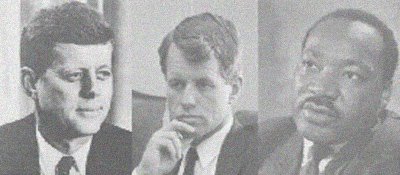
This forum focuses on civil rights though the eyes of those on the front lines of the movement. The second session features Marian Wright Edelman, founder and chairman of the Children's Defense Fund and an organizer of Dr. King's Poor People's March; Peter Edelman, aide to Robert F. Kennedy; and Elaine Jones, former President of the NAACP's Legal Defense and Educational Fund. This session examines the period between 1963-1968 and the continuing relationship between Martin Luther King Jr. and Robert F. Kennedy concerning civil rights and their growing opposition to the Vietnam War.

JFK, MLK and RFK: 1960-1968 Part I

Theodore Sorensen, special counsel, Kennedy administration
Harris Wofford, former chairman, subcabinet, Civil Rights
Taylor Branch, writer, 1989 Pulitzer Prize
Robert Moses, organizer, SNVCC
Juan Williams, moderator

JFK, MLK and RFK: 1960-1968 Part II
Marian Wright Edelman, founder, Children's Defense Fund
Peter Edelman, aide to Robert F. Kennedy
Elaine Jones, former president, NAACP's Legal Defense Fund
Juan Williams, moderator

Wednesday, August 09, 2006

For the Love of You


Driftin’ on a memory
Ain’t no place I’d rather be
Than with you, yeah
Lovin’ you, well, well, well

Day will make a way for night
All we’ll need is candlelight
And a song, yeah
Soft and long, well, ooh

Glad to be
Here alone with a lover unlike no other
Sad to see
A new horizon slowly comin’ into view, yeah

I wanna be livin’
For the love of you, oh, yes, I am
All that I’m givin’
Is for the love of you, alright now, ooh

Lovely as a ray of sun
That touches me when the mornin’ comes
Feels good to me, yeah
My love and me, well

Smoother than a gentle breeze
Flowin’ through my mind with ease
Soft as can be, well
When you’re lovin’ me, when you’re lovin’ me, ooh

Love to be
Ridin’ the waves of your love, enchanted with your touch
And it seems to me
We could sail together in and out of mystery, well

I wanna be livin’
For the love of you, alright now
All that I’m givin’
Is for the love of you, you got me, girl

I wanna be livin’
For the love of you, alright now
All that I’m givin’, givin’
Is for the love of you, oh, yes, I am

Paradise I have within
Can’t feel insecure again
You’re the key, well
And this I see, for I see

Now and then I lose my way
Usin’ words that try to say
What I feel, yeah
Love is real, oh, love is real, ooh

I might as well
Sign my name on a card which could say it better
Time will tell
‘Cause it seems that I’ve done just about all that I can do

I know that I’m livin’
For the love of you, oh, yes, I am
I know that I’m livin’
For the love, love of you

Every, every day I’m livin’
For love of you
I’m livin’ for the love
Each and every day

I’m, oh, whoa, I’m, oh, yes, I am
I wanna say it one more time
Said I’m livin’
For the love

Each and every day I’m, oh, whoa, I’m
Lord knows I am
Write that down
Said that I’m livin’
For the love, love of you
Ooh, ooh


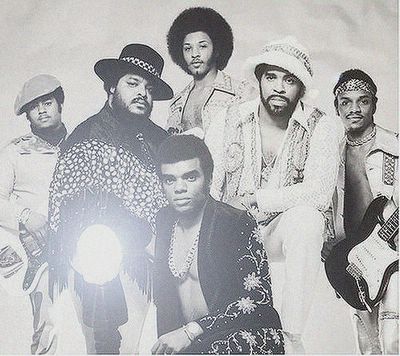
Rock & Roll Hall of Fame page on The Isley Brothers

The Hotel Book: Great Escapes Africa


Organic luxury

Whether you’ve always dreamed of a vacation in Africa or never even considered it, take one look through this book and you’ll be planning your next five holidays before you know it. Our selection of the most splendid getaway havens nestled throughout the continent is sure to please even the most finicky would-be voyagers. Everything you need to know about each hotel, including pricing, services, contact information, and reading recommendations, is provided alongside opulent interior and exterior photographs. Who minds sleeping under a mosquito net when it’s royally draped over your bed in a lush Kenyan open-walled hut fashioned from tree trunks and shielded from the sun by a sumptuous thatched roof? Or how about your very own South African A-frame beachside bungalow made of bamboo stalks? Seeing is believing, for sure, but even with the photos as evidence these places are not to be believed….


Taschen Books


Taschen is an art book publisher founded in 1980 by Benedikt Taschen in Cologne, Germany. It began as Taschen Comics publishing Benedikt's extensive comic collection. Taschen has been a noteworthy force in making lesser-seen art available to mainstream bookstores, including some fetishistic imagery, queer art, historical erotica, pornography and adult magazines (including multiple books with Playboy magazine). Taschen has helped bring this art into broader public view, by publishing these potentially controversial volumes alongside its more mainstream books of comics reprints, art photography, painting, design, fashion, advertising history, film, and architecture.

Taschen's publications are available in a variety of sizes, from large tomes detailing the complete works of Leonardo Da Vinci, to surprisingly uncommon middle-sized books, to their "Icons" series of small, flexicover volumes which encapsulate themes of everything from old ads of Las Vegas, Nevada to male nudes. The company has also produced calendars, address books, and postcards of popular subjects.

The company's stated mission has been to publish innovative, beautifully designed art books at popular prices. The Icons series, for example, has several new volumes published a year, and retailing for about $10 are inexpensive for published collections of art.

Taschen has published the second most expensive book in publishing history, the $12,500, 75 pound, 700 page GOAT (Greatest of All Time), a tribute to Muhammed Ali which Der Spiegel called "the biggest, heaviest, most radiant thing ever printed in the history of civilization." They have also published the $1500 Helmut Newton retrospective Sumo and a $2500 limited edition Araki volume.

Dedicated flagship Taschen bookstores are located in Berlin, Tokyo, Los Angeles, and Paris.

Thursday, July 27, 2006

Snow Crash and Second Life


Second Life is a privately-owned, partly subscription-based 3-D Virtual world, made publicly available in 2003 by San Francisco-based Linden Lab, founded by former RealNetworks CTO Philip Rosedale. The Second Life "world" resides in a large array of servers that are owned and maintained by Linden Lab, known collectively as "the Grid". The Second Life client program provides its users (referred to as "residents") tools to view and modify the SL world and participate in its economy.

The majority of the content in the Second Life world is resident-created. Linden Lab actively promotes the concept that residents retain the intellectual property rights to objects they create.

NPR Weekend Edition Saturday: Sci-Fi Inspires Engineers To Build Our Future - Philip Rosedale created the virtual world of "Second Life" based on the "Metaverse" of Neal Stephenson's science fiction novel Snow Crash.


Snow Crash
by Neal Stephenson

from Bantam . . .

Only once in a great while does a writer come along who defies comparison--a writer so original he redefines the way we look at the world. Neal Stephenson is such a writer and Snow Crash is such a novel, weaving virtual reality, Sumerian myth, and just about everything in between with a cool, hip cybersensibility to bring us the gigathriller of the information age.


The Metaverse
Wikipedia

"The Metaverse, Stephenson's successor to the Internet, permeates ruling-class activities and constitutes Stephenson's vision of how a virtual reality-based Internet might evolve in the near future. Although there are public-access Metaverse terminals in Reality, using them carries a social stigma among Metaverse denizens, in part because of the low visual quality of their avatars (the Metaverse representation of a user). In the Metaverse, status is a function of two things: access to restricted environments (such as the Black Sun, an exclusive Metaverse club) and technical acumen (often demonstrated by the sophistication of one's avatar)."

"The Metaverse,... constitutes Stephenson's vision of how a virtual reality-based Internet might evolve in the near future.

In Snow Crash, the Metaverse can be accessed through public-access terminals in reality. However, using them carries a social stigma among Metaverse denizens, in part because of the low visual quality of the rendered avatar; the Metaverse representations of a user in virtual-reality. Entering the Metaverse through a private terminal, making it possible to customize your avatar, is possible from almost any location using portable devices. In the Metaverse, status is a function of two things: access to restricted environments (such as the Black Sun, an exclusive Metaverse club) and technical acumen (often demonstrated by the sophistication of one's avatar). The Metaverse is frequented mainly by the upper and middle classes.

The landscape of Stephenson's Metaverse is a black ball 65536 km (216 km) in circumference, over 1.6 times Earth's equatorial circumference. The Street runs around the equator of the virtual sphere and is 100 meters across. 256 Express Ports are located evenly at 256 km intervals beside the Street. These 256 kilometer intervals are further divided by Local Ports, one kilometer apart. Just like with terrestrial real-estate, you can buy a development license and build anything you want off the street so long it is approved by the Global Multimedia Protocol Group, the group which specifies and runs the Street protocol."

Thursday, July 20, 2006

Time to arise from the great slump


Jul 20th 2006 | TOKYO
From The Economist print edition

"As Japan emerges from an era of a zero interest rate, the country still needs to put more of its past behind it"

Monday, July 10, 2006

Rinky Dink Studios "Warp" annex: Bar Cheeky

Bar CHEEKY of Kichijoji, is the annex of Rinky Dink Studio's Warp.
The best musicians gather there, and are always be there at the brink of dawn.

Time spent there is to experience musical and artistic genius.

Schedule (Shift_JIS encoded)
Map


Monday, June 26, 2006

Frontline: The Dark Side


Frontline: The Dark Side
PBS.org, June 20, 2006


Amid revelations about faulty prewar intelligence and a scandal surrounding the indictment of the vice president's chief of staff and presidential adviser, I. Lewis "Scooter" Libby, FRONTLINE goes behind the headlines to investigate the internal war that was waged between the intelligence community and Richard Bruce Cheney, the most powerful vice president in the nation's history.