Monday, October 23, 2006

Inner City Blues (Make Me Wanna Holler)


Rockets, moon shots
Spend it on the have nots
Money, we make it
Fore we see it you take it

Oh, make you wanna holler
The way they do my life
Make me wanna holler
The way they do my life
This ain't livin', This ain't livin'
No, no baby, this ain't livin'
No, no, no

Inflation no chance
To increase finance
Bills pile up sky high
Send that boy off to die

Make me wanna holler
The way they do my life
Make me wanna holler
The way they do my life

Dah, dah, dah
Dah, dah, dah

Hang ups, let downs
Bad breaks, set backs
Natural fact is
I can't pay my taxes

Oh, make me wanna holler
And throw up both my hands
Yea, it makes me wanna holler
And throw up both my hands

Crime is increasing
Trigger happy policing
Panic is spreading
God know where we're heading

Oh, make me wanna holler
They don't understand

Dah, dah, dah
Dah, dah, dah
Dah, dah, dah

Mother, mother
Everybody thinks we're wrong
Who are they to judge us
Simply cause we wear our hair long


Rolling Stone - biography
Rock and Roll Hall of Fame - Inductee


Wednesday, October 18, 2006

Frontline: Lost Year in Iraq, Enemy Within, Return of the Taliban


The Lost Year in Iraq
10/17/2006

Today, as America looks for an exit strategy, FRONTLINE examines the initial, critical decisions of the U.S.-led regime in Baghdad in The Lost Year in Iraq. From the same team that produced Rumsfeld's War, The Torture Question and The Dark Side, the film is based on more than 30 interviews, most of them with the officials charged with building a new and democratic Iraq.

The Enemy Within
10/10/2006

However, a deeper look at the evidence creates uncertainty about what kind of threat actually did exist in Lodi and provides a case study of America's response to the threat of domestic terrorism. In "The Enemy Within," FRONTLINE and New York Times reporter Lowell Bergman examines the Lodi case and interviews FBI and Homeland Security officials to assess U.S. anti-terror efforts

Return of the Taliban
10/3/2006

After the fall of the Taliban five years ago, some experts warned of a nightmare scenario in which the Taliban and Al Qaeda would escape from Afghanistan into neighboring Pakistan and set up new command centers far out of America's reach.

Tuesday, September 26, 2006

American Experience: Eyes on the Prize


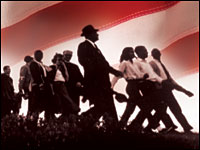
America's Civil Rights Years (1954-1965) is a documentary series about the American Civil Rights Movement. It originally aired on PBS in early 1987 with six initial parts; eight more parts were broadcast in 1990 as Eyes on the Prize II: America at the Racial Crossroads (1965-1985), for a total of fourteen episodes. It uses archival footage to record the growth of the American Civil Rights Movement, with special focus on the ordinary people who affected the change. It was produced by Henry Hampton at Blackside Inc.

The series has been hailed as more than just a historical document. Clayborne Carson, a Stanford University history professor and editor of Martin Luther King Jr.'s papers, remarked that "it is the principal film account of the most important American social justice movement of the 20th century." Because of its extensive use of primary sources and the depth of coverage of the material, it has been adopted as a key reference and record of the civil rights movement.


Talk of the Nation
September 26, 2006
It took filmmaker Henry Hampton 12 years to bring Eyes on the Prize to television. When he did, the PBS documentary on the civil rights movement was a revelation for much of America. Nearly 20 years later, PBS will rebroadcast the series.


American Experience, October 2006
The landmark 14-hour series, created and executive produced by award-winning filmmaker Henry Hampton, will air on American Experience in October 2006, as part of the acclaimed history series' 19th season.
Broadcast dates

The first six hours of Eyes on the Prize will air three consecutive Mondays, October 2, 9, and 16, 2006, at 9 pm.


Monday, September 11, 2006

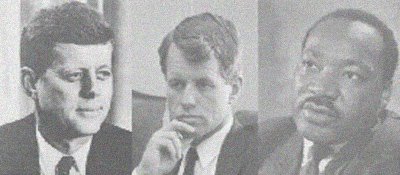
JFK, MLK and RFK: 1960-1968


This forum focuses on civil rights though the eyes of those on the front lines of the movement. The second session features Marian Wright Edelman, founder and chairman of the Children's Defense Fund and an organizer of Dr. King's Poor People's March; Peter Edelman, aide to Robert F. Kennedy; and Elaine Jones, former President of the NAACP's Legal Defense and Educational Fund. This session examines the period between 1963-1968 and the continuing relationship between Martin Luther King Jr. and Robert F. Kennedy concerning civil rights and their growing opposition to the Vietnam War.

JFK, MLK and RFK: 1960-1968 Part I

Theodore Sorensen, special counsel, Kennedy administration
Harris Wofford, former chairman, subcabinet, Civil Rights
Taylor Branch, writer, 1989 Pulitzer Prize
Robert Moses, organizer, SNVCC
Juan Williams, moderator

JFK, MLK and RFK: 1960-1968 Part II
Marian Wright Edelman, founder, Children's Defense Fund
Peter Edelman, aide to Robert F. Kennedy
Elaine Jones, former president, NAACP's Legal Defense Fund
Juan Williams, moderator

Wednesday, August 09, 2006

For the Love of You


Driftin’ on a memory
Ain’t no place I’d rather be
Than with you, yeah
Lovin’ you, well, well, well

Day will make a way for night
All we’ll need is candlelight
And a song, yeah
Soft and long, well, ooh

Glad to be
Here alone with a lover unlike no other
Sad to see
A new horizon slowly comin’ into view, yeah

I wanna be livin’
For the love of you, oh, yes, I am
All that I’m givin’
Is for the love of you, alright now, ooh

Lovely as a ray of sun
That touches me when the mornin’ comes
Feels good to me, yeah
My love and me, well

Smoother than a gentle breeze
Flowin’ through my mind with ease
Soft as can be, well
When you’re lovin’ me, when you’re lovin’ me, ooh

Love to be
Ridin’ the waves of your love, enchanted with your touch
And it seems to me
We could sail together in and out of mystery, well

I wanna be livin’
For the love of you, alright now
All that I’m givin’
Is for the love of you, you got me, girl

I wanna be livin’
For the love of you, alright now
All that I’m givin’, givin’
Is for the love of you, oh, yes, I am

Paradise I have within
Can’t feel insecure again
You’re the key, well
And this I see, for I see

Now and then I lose my way
Usin’ words that try to say
What I feel, yeah
Love is real, oh, love is real, ooh

I might as well
Sign my name on a card which could say it better
Time will tell
‘Cause it seems that I’ve done just about all that I can do

I know that I’m livin’
For the love of you, oh, yes, I am
I know that I’m livin’
For the love, love of you

Every, every day I’m livin’
For love of you
I’m livin’ for the love
Each and every day

I’m, oh, whoa, I’m, oh, yes, I am
I wanna say it one more time
Said I’m livin’
For the love

Each and every day I’m, oh, whoa, I’m
Lord knows I am
Write that down
Said that I’m livin’
For the love, love of you
Ooh, ooh


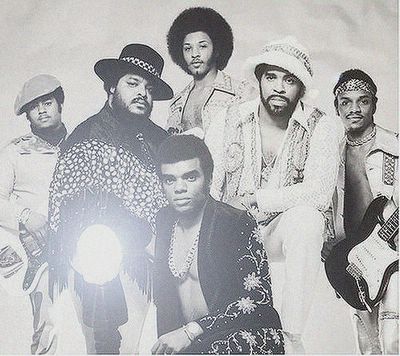
Rock & Roll Hall of Fame page on The Isley Brothers

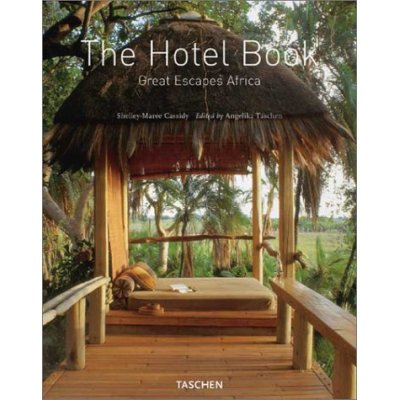
The Hotel Book: Great Escapes Africa


Organic luxury

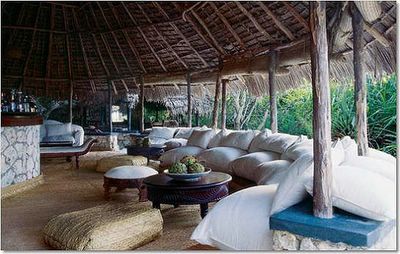
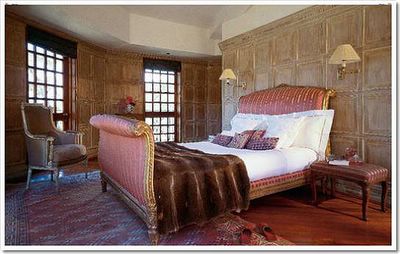
Whether you’ve always dreamed of a vacation in Africa or never even considered it, take one look through this book and you’ll be planning your next five holidays before you know it. Our selection of the most splendid getaway havens nestled throughout the continent is sure to please even the most finicky would-be voyagers. Everything you need to know about each hotel, including pricing, services, contact information, and reading recommendations, is provided alongside opulent interior and exterior photographs. Who minds sleeping under a mosquito net when it’s royally draped over your bed in a lush Kenyan open-walled hut fashioned from tree trunks and shielded from the sun by a sumptuous thatched roof? Or how about your very own South African A-frame beachside bungalow made of bamboo stalks? Seeing is believing, for sure, but even with the photos as evidence these places are not to be believed….


Taschen Books


Taschen is an art book publisher founded in 1980 by Benedikt Taschen in Cologne, Germany. It began as Taschen Comics publishing Benedikt's extensive comic collection. Taschen has been a noteworthy force in making lesser-seen art available to mainstream bookstores, including some fetishistic imagery, queer art, historical erotica, pornography and adult magazines (including multiple books with Playboy magazine). Taschen has helped bring this art into broader public view, by publishing these potentially controversial volumes alongside its more mainstream books of comics reprints, art photography, painting, design, fashion, advertising history, film, and architecture.

Taschen's publications are available in a variety of sizes, from large tomes detailing the complete works of Leonardo Da Vinci, to surprisingly uncommon middle-sized books, to their "Icons" series of small, flexicover volumes which encapsulate themes of everything from old ads of Las Vegas, Nevada to male nudes. The company has also produced calendars, address books, and postcards of popular subjects.

The company's stated mission has been to publish innovative, beautifully designed art books at popular prices. The Icons series, for example, has several new volumes published a year, and retailing for about $10 are inexpensive for published collections of art.

Taschen has published the second most expensive book in publishing history, the $12,500, 75 pound, 700 page GOAT (Greatest of All Time), a tribute to Muhammed Ali which Der Spiegel called "the biggest, heaviest, most radiant thing ever printed in the history of civilization." They have also published the $1500 Helmut Newton retrospective Sumo and a $2500 limited edition Araki volume.

Dedicated flagship Taschen bookstores are located in Berlin, Tokyo, Los Angeles, and Paris.

Thursday, July 27, 2006

Snow Crash and Second Life


Second Life is a privately-owned, partly subscription-based 3-D Virtual world, made publicly available in 2003 by San Francisco-based Linden Lab, founded by former RealNetworks CTO Philip Rosedale. The Second Life "world" resides in a large array of servers that are owned and maintained by Linden Lab, known collectively as "the Grid". The Second Life client program provides its users (referred to as "residents") tools to view and modify the SL world and participate in its economy.

The majority of the content in the Second Life world is resident-created. Linden Lab actively promotes the concept that residents retain the intellectual property rights to objects they create.

NPR Weekend Edition Saturday: Sci-Fi Inspires Engineers To Build Our Future - Philip Rosedale created the virtual world of "Second Life" based on the "Metaverse" of Neal Stephenson's science fiction novel Snow Crash.


Snow Crash
by Neal Stephenson

from Bantam . . .

Only once in a great while does a writer come along who defies comparison--a writer so original he redefines the way we look at the world. Neal Stephenson is such a writer and Snow Crash is such a novel, weaving virtual reality, Sumerian myth, and just about everything in between with a cool, hip cybersensibility to bring us the gigathriller of the information age.


The Metaverse
Wikipedia

"The Metaverse, Stephenson's successor to the Internet, permeates ruling-class activities and constitutes Stephenson's vision of how a virtual reality-based Internet might evolve in the near future. Although there are public-access Metaverse terminals in Reality, using them carries a social stigma among Metaverse denizens, in part because of the low visual quality of their avatars (the Metaverse representation of a user). In the Metaverse, status is a function of two things: access to restricted environments (such as the Black Sun, an exclusive Metaverse club) and technical acumen (often demonstrated by the sophistication of one's avatar)."

"The Metaverse,... constitutes Stephenson's vision of how a virtual reality-based Internet might evolve in the near future.

In Snow Crash, the Metaverse can be accessed through public-access terminals in reality. However, using them carries a social stigma among Metaverse denizens, in part because of the low visual quality of the rendered avatar; the Metaverse representations of a user in virtual-reality. Entering the Metaverse through a private terminal, making it possible to customize your avatar, is possible from almost any location using portable devices. In the Metaverse, status is a function of two things: access to restricted environments (such as the Black Sun, an exclusive Metaverse club) and technical acumen (often demonstrated by the sophistication of one's avatar). The Metaverse is frequented mainly by the upper and middle classes.

The landscape of Stephenson's Metaverse is a black ball 65536 km (216 km) in circumference, over 1.6 times Earth's equatorial circumference. The Street runs around the equator of the virtual sphere and is 100 meters across. 256 Express Ports are located evenly at 256 km intervals beside the Street. These 256 kilometer intervals are further divided by Local Ports, one kilometer apart. Just like with terrestrial real-estate, you can buy a development license and build anything you want off the street so long it is approved by the Global Multimedia Protocol Group, the group which specifies and runs the Street protocol."

Thursday, July 20, 2006

Time to arise from the great slump


Jul 20th 2006 | TOKYO
From The Economist print edition

"As Japan emerges from an era of a zero interest rate, the country still needs to put more of its past behind it"

Monday, July 10, 2006

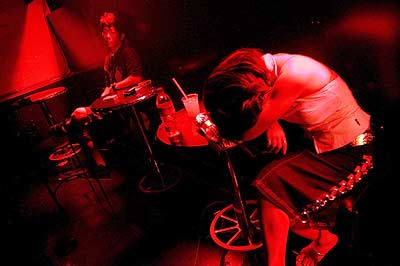
Rinky Dink Studios "Warp" annex: Bar Cheeky

Bar CHEEKY of Kichijoji, is the annex of Rinky Dink Studio's Warp.
The best musicians gather there, and are always be there at the brink of dawn.

Time spent there is to experience musical and artistic genius.

Schedule (Shift_JIS encoded)
Map


Monday, June 26, 2006

Frontline: The Dark Side


Frontline: The Dark Side
PBS.org, June 20, 2006


Amid revelations about faulty prewar intelligence and a scandal surrounding the indictment of the vice president's chief of staff and presidential adviser, I. Lewis "Scooter" Libby, FRONTLINE goes behind the headlines to investigate the internal war that was waged between the intelligence community and Richard Bruce Cheney, the most powerful vice president in the nation's history.

Foreign Affairs: The Rise of India


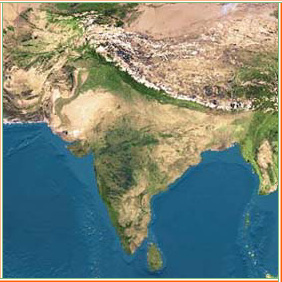
Once proudly socialist and nonaligned, India is being remade as a roaring capitalist success story and emerging strategic partner of the United States. Economic reforms have raised per capita GDP and lowered poverty rates, while New Delhi's growing self-confidence may help it become the swing state in the global balance of power.

In this special lead package, therefore, Foreign Affairs has brought together four top experts to analyze the sources and implications of India's rise — and the policies necessary for it to continue.


The India Model
by Gurcharan Das
"Once shackled by the state, India's economy is now among the fastest-growing in the world. But for that growth to continue, the state must start modernizing along with Indian society."

America's New Strategic Partner?

by Ashton B. Carter
"The U.S.-Indian nuclear deal struck last summer has yet to be approved by Congress. A top nonproliferation expert says they should agree to it in order to nourish the budding U.S.-Indian strategic partnership. "

Thursday, June 01, 2006

Robert Fisk: War, Geopolitics, and History


forum.wgbh.org (Audio, Video, MP3)

War, Geopolitics, and History
Robert Fisk, correspondent, The Independent
Noam Chomsky, professor, linguistics, MIT
MIT Technology and Culture Forum
Sunday, April 9, 2006
MIT, Kresge Auditorium


"Journalist Robert Fisk of the UK-based publication, The Independent, recounts his experiences traveling around the world and living in the Middle East, Fisk speaks on history and geopolitics in the Middle East. His focus is on the problems with journalism in the United States, which include an over-reliance on what government authorities say and the common mode of reporting 'from Baghdad' but entirely within the confines of a hotel room. Using newspaper articles and speeches from politicians, Fisk illustrates the lack of concern for Iraqis as human beings. Fisk's talk also looks at the Armenian genocide, which was downplayed in Western media. After the talk, Fisk fields questions ranging from the rumors of civil war in Iraq to the situation in Lebanon."


The Great War for Civilisation : The Conquest of the Middle East

Book Description
www.amazon.com

"During the thirty years that award-winning journalist Robert Fisk has been reporting on the Middle East, he has covered every major event in the region, from the Algerian Civil War to the Iranian Revolution, from the American hostage crisis in Beirut (as one of only two Western journalists in the city at the time) to the Iran-Iraq War, from the Russian invasion of Afghanistan to Israel’s invasions of Lebanon, from the Gulf War to the invasion and ongoing war in Iraq. Now he brings his knowledge, his firsthand experience and his intimate understanding of the Middle East to a book that addresses the full complexity of its political history and its current state of affairs.

Passionate in his concerns about the region and relentless in his pursuit of the truth, Fisk has been able to enter the world of the Middle East and the lives of its people as few other journalists have. The result is a work of stunning reportage. His unblinking eyewitness testimony to the horrors of war places him squarely in the tradition of the great frontline reporters of the Second World War. His searing descriptions of lives mangled in the chaos of battle and of the battles themselves are at once dreadful and heartrending."

American Experience: LBJ (1991)


American Experience: LBJ (1991)
4 Hours

www.pbs.org

One of the most controversial U.S. presidents, Lyndon Baines Johnson rose from obscurity to the pinnacle of power, only to suffer disillusionment and defeat. Witness the events that brought LBJ from Texas to Washington, the White House, and a landslide election in 1964. Follow his triumphs in passing passes a wave of social legislation. Then, as war and civil turmoil ravage the country, his downward spiral ends in withdrawal from politics.


"LBJ, Lyndon Baines Johnson -- Texan, Democrat, political virtuoso. He rises up out of the 1960s like a Colossus, like something from Shakespeare, filling the stage -- 10, 12 characters in one. He is admired and he is detested. Everybody who knew him had stories.

Yet Lyndon Johnson was hard for the country to know. He seemed so stiff and colorless on television, not at all himself. The real Lyndon Johnson was a mover, a driver, a charmer, a bully -- six feet four inches tall with a size 7-3/8 Stetson hat. He loved food -- chili and tapioca pudding. He loved attractive women. He was a good dancer, a brilliant mimic. He was funny, often hilarious. They all say that.

But the real measure of a leader is what he gets done, the size of the problems he faces. Before Lyndon Johnson, we were essentially a segregated society. Inequality among black Americans in the South was set in law. Before Lyndon Johnson, there was no Head Start program, no Medicare -- so much that we take for granted -- and before Lyndon Johnson, very few Americans had even heard of Vietnam. He is a story, a very American story and, in all, a tragedy in the real sense. He's the central character in a struggle of moral importance ending in ruin. "

Monday, May 22, 2006

Holy Moses


Holy Moses, I have been removed,
I have seen the spectre, he has been here too,
Distant cousin from down the line
Brand of people who ain't my kind
Holy Moses, I have been removed

Holy Moses, I have been deceived,
Now the wind has changed direction and I'll have to leave
Won't you please excuse my frankness but it's not my cup of tea
Holy Moses, I have been deceived

I'm going back to the border
Where my affairs, my affairs ain't abused
I can't take any more bad water
I've been poisoned from my head down to my shoes

Holy Moses, I have been deceived.


Aretha Franklin
Holy Moses


Aretha Franlin - Time 100

Wednesday, May 03, 2006

SOHO (Solar & Heliospheric Observatory)


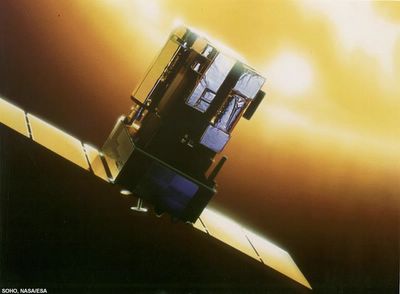
SOHO was launched on December 2, 1995. The SOHO spacecraft was built in Europe by an industry team led by Matra, and instruments were provided by European and American scientists. There are nine European Principal Investigators (PI's) and three American ones. Large engineering teams and more than 200 co-investigators from many institutions supported the PI's in the development of the instruments and in the preparation of their operations and data analysis. NASA was responsible for the launch and is now responsible for mission operations. Large radio dishes around the world which form NASA's Deep Space Network are used to track the spacecraft beyond the Earth's orbit. Mission control is based at Goddard Space Flight Center in Maryland.


Originally a two-year mission, SOHO has now operated for over ten years (as of 2006). It has proved so useful that a follow-on mission, the Solar Dynamics Observatory, is planned for launch in 2008. Situated at the Lagrangian point between the Earth and the Sun (at which the gravitational pull from both is equal), SOHO has provided a constant view of the Sun at many wavelengths since its launch. In addition to its direct solar observation, SOHO has enabled the discovery of large numbers of comets, mostly very tiny sungrazing comets which incinerate as they pass the Sun.


Humanity's most fundamental understanding of the Sun is as the luminous disk in the heavens, whose presence above the horizon creates day and whose absence causes night. In many prehistoric and ancient cultures, the Sun was thought to be a solar deity or other supernatural phenomenon, and worship of the Sun was central to civilizations such as the Inca of South America and the Aztecs of what is now Mexico.

Many ancient monuments were constructed with solar phenomena in mind; for example, stone megaliths accurately mark the summer solstice (some of the most prominent megaliths are located in Nabta Playa, Egypt, and at Stonehenge in England); the pyramid of El Castillo at Chichén Itzá in Mexico is designed to cast shadows in the shape of serpents climbing the pyramid at the vernal and autumn equinoxes.

With respect to the fixed stars, the Sun appears from Earth to revolve once a year along the ecliptic through the zodiac, and so the Sun was considered by Greek astronomers to be one of the seven planets (Greek planetes, "wanderer"), after which the seven days of the week are named in some languages.

Sunday, April 30, 2006

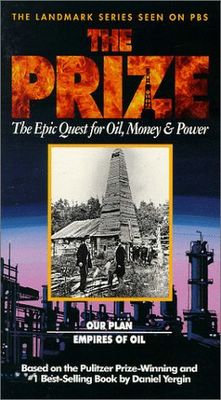
The Prize: The Epic Quest for Oil, Money, and Power


The landmark series seen on PBS.

The Book

Wikipedia.com

The Prize: The Epic Quest for Oil, Money, and Power (1991; ISBN 0671502484) is Daniel Yergin's 800-page history of the global oil industry from the 1850s through 1990. The Prize benefited from extraordinary timing: published in October 1990, two months after the invasion of Kuwait ordered by Saddam Hussein and three months before the U.S.-led coalition unleashed the Gulf War to oust Iraqi troops from that country, the book's theme of the historical centrality of what its subtitle calls "the epic quest for oil, money, and power" was in tune with the zeitgeist; the book became a number-one bestseller in the United States and won a Pulitzer Prize.

Part III: War and Strategy
Ch. 16: Japan’s Road to War

Japan occupies Manchuria, 1931 (305). Ultranationalist militarists in power (306). Japan dependent on foreign oil, especially Rising Sun (Japanese affiliate of Royal Dutch/Shell) and Standard-Vacuum (Stanvac, an amalgam of Jersey and Standard of New York’s Far East operations) (307). 1934 Petroleum Industry Law squeezed companies (308). Japan attacks China, 1937; placates companies as U.S. public opinion sides with China (308-10). Stanvac resolved on embargo of Japan if U.S. so decides (310-11). U.S. moves fleet to Pearl Harbor and restricts (but does not stop) oil shipments to Japan, 1940 (311-13). Cordell Hull & Admiral Nomura converse repeatedly (313-14). Admiral Yamamoto sensitive to Japan’s oil predicament (314-16). Japan invades Indochina; U.S. effectively embargoes oil, July 1941 (316-19). P.M. Konoye-Roosevelt summit doesn’t come off (319-20). Japanese resolve on war (320-23). Operation Hawaii’s primary target is East Indian oilfields (325-26). Japanese err in failing to destroy 4,500,000 barrels (720,000 m³) of vulnerable U.S. oil supplies at Pearl Harbor (326-27).


The Documentary Film

Amazon.com

The PBS documentary film is an exciting and entertaining eight-part series, based on Daniel Yergin's Pulitzer Prize-winning book, captures the panoramic history of the biggest industry in the world. Shot on location in Azerbaijan, Egypt, England, Indonesia, Japan, Kuwait, Mexico, Russia, Scotland, Turkey, and the United States, the series features fascinating characters, archival footage, and interviews with the people who shaped the oil industry.

Baraka (1992)


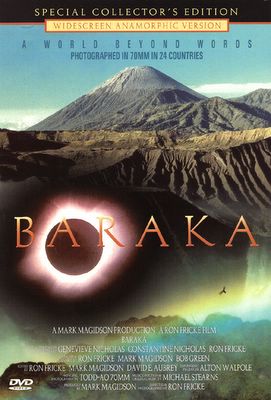
Baraka is an incredible journey through 6 continents, 24 countries. Painstakingly shot on Todd AO-70mm film. Baraka has no plot, contains no actors and has no script. Baraka is a collection of high quality images, presented in a moving and compelling manner.

Baraka is evidence of a huge global project fueled by a personal passion for the world and visual art. Working on a reported US$4 million budget, Ron Fricke and Mark Magidson, with a three-person crew, swept through 24 countries in 14 months to make this stunning film.
One of the very last films shot in the expensive TODD-AO 70mm format, Ron Fricke developed a computer-controlled camera for the incredible time-lapse shots, including New York's Park Avenue rush hour traffic and the crowded Tokyo subway platforms.

Tuesday, April 18, 2006

Noam Chomsky: Failed States


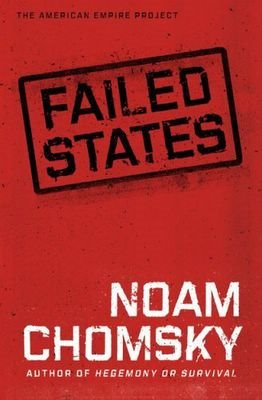
"Noam Chomsky, professor of linguistics at the Massachusetts Institute of Technology and one of the foremost critics of U.S. foreign policy. Professor Chomsky has just released a new book titled "Failed States: The Abuse of Power and the Assault on Democracy."

It examines how the United States is beginning to resemble a failed state that cannot protect its citizens from violence and has a government that regards itself as beyond the reach of domestic or international law.
In the book, Professor Noam Chomsky presents a series of solutions to help rescue the nation from turning into a failed state."


Interviews at Democracynow.org

Noam Chomsky on Failed States: The Abuse of Power and the Assault on Democracy
March 31, 2006

Noam Chomsky on Iraq Troop Withdrawal, Haiti, Democracy in Latin America and the Israeli Elections

April 3, 2006

Wednesday, April 05, 2006

Who the Cap Fit


Man to man is so unjust, children
You don't know who to trust
Your worst enemy could be your best friend
And your best friend your worst enemy

Some will eat and drink with you
Then behind them su-su 'pon you
Only your friend know your secrets
So only he could reveal it

Some will hate you, pretend they love you now,
Then behind they try to eliminate you.
But who Jah bless, no one curse;
Thank God, we're past the worse.

Hypocrites and parasites
Will come up and take a bite.
And if your night should turn to day,
A lot of people would run away.

And who the cap fit let them wear it!

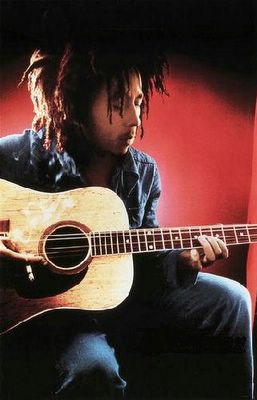
Bob Marley
Who the Cap Fit

Sunday, March 26, 2006

A Short History of Nearly Everything


A Short History of Nearly Everything
Bill Bryson

In A Short History of Nearly Everything, beloved author Bill Bryson confronts his greatest challenge yet: to understand—and, if possible, answer—the oldest, biggest questions we have posed about the universe and ourselves. Taking as his territory everything from the Big Bang to the rise of civilization, Bryson seeks to understand how we got from there being nothing at all to there being us.


NPR.org - Talk of the Nation, May 21, 2003
Jupiter Science Review

“Stylish [and] stunningly accurate prose. We learn what the material world is like from the smallest quark to the largest galaxy and at all the levels in between . . . brims with strange and amazing facts . . . destined to become a modern classic of science writing.”

The New York Times


Friday, March 10, 2006

Unlocking the Secrets of Longevity Genes

A handful of genes that control the body's defenses during hard times can also dramatically improve health and prolong life in diverse organisms. Understanding how they work may reveal the keys to extending human life span while banishing diseases of old age.


sciam.com - Scientific American Magazine March 2006

Saturday, February 11, 2006

Omotesando Hills


www.mori.co.jp/projects/omotesando

"Take a coveted commercial location in Tokyo, and Tadao Ando, one of Japan's most talented architects, and what do you get? A building that is now dubbed “Omotesando Hills”. From the outside, the two-story structure, covered in 250 square metres of glass, offers no hint of what lies within. But step inside and you find yourself in a long, narrow building, with sloping walkways and more than 90 spanking new shops and restaurants. On the upper floors are 38 smart flats."

economist.com -
Cities Guide Tokyo, Catch if you can February 2006

Sunday, February 05, 2006

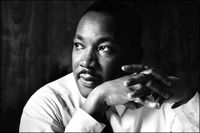
Taylor Branch, The King Center

Taylor Branch's "America in the King Years" series is both a biography of Martin Luther King and a history of his age.

@NPR.org
News & Notes with Ed Gordon
Closing an MLK Trilogy 'At Canaan's Edge'
January 20, 2006


Fresh Air from WHYY

Terry Gross talks with author Taylor Branch, who has written the third in a trilogy of biographies on Martin Luther King Jr.
January 16, 2006


Weekend Edition - Sunday
Martin Luther King, 'At Canaan's Edge'
January 15, 2006


Parting the Waters : America in the King Years 1954-63

The first book of a formidable three-volume social history, Parting the Waters is more than just a biography of the Rev. Martin Luther King Jr. during the decade preceding his emergence as a national figure. Branch's thousand-page effort, which won the Pulitzer Prize as well as the National Book Critics Circle Award for General Nonfiction, profiles the key players and events that helped shape the American social landscape following World War II but before the civil-rights movement of the 1960s reached its climax. The author then goes a step further, endeavoring to explain how the struggles evolved as they did by probing the influences of the main actors while discussing the manner in which events conspired to create fertile ground for change.


Pillar of Fire : America in the King Years 1963-65

Pillar of Fire is the second volume of Taylor Branch's magisterial three-volume history of America during the life of the Reverend Martin Luther King Jr. Branch's thesis, as he explains in the introduction, is that "King's life is the best and most important metaphor for American history in the watershed postwar years," but this is not just a biography. Instead it is a work of history, with King at its focal point. The tumultuous years that Branch covers saw the assassination of President John F. Kennedy, the beginnings of American disillusionment with the war in Vietnam, and, of course, the civil rights movement that King led, a movement that transformed America as the nation finally tried to live up to the ideals on which it was founded.


At Canaan's Edge : America in the King Years, 1965-68

King's movement may have been nonviolent, but his times were not, and each of Branch's volumes ends with an assassination: JFK, then Malcolm X, and finally King's murder in Memphis. We know that's where At Canaan's Gate is headed, but it starts with King's last great national success, the marches for voting rights in Selma, Alabama, in 1965. Once again, the violent response to nonviolent protest brought national attention and support to King's cause, and within months his sometime ally Lyndon Johnson was able to push through the Voting Rights Act. But alongside those events, forces were gathering that would pull King's movement apart and threaten his national leadership. The day after Selma's "Bloody Sunday," the first U.S. combat troops arrived in South Vietnam, while five days after the signing of the Voting Rights Act, the Watts riots began in Los Angeles. As the escalating carnage in Vietnam and the frustrating pace of reform at home drove many in the movement, most notably Stokely Carmichael, away from nonviolence, King kept to his most cherished principle and followed where its logic took him: to war protests that broke his alliance with Johnson and to a widening battle against poverty in the North as well as the South that caused both critics and allies to declare his movement unfocused and irrelevant.


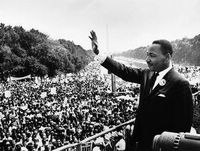
Martin Luther King's Acceptance Speech, on the occasion of the award of the Nobel Peace Peace Prize in Oslo, Norway December 10, 1964

"After contemplation, I conclude that this award which I receive on behalf of that movement is a profound recognition that nonviolence is the answer to the crucial political and moral question of our time - - the need for man to overcome oppression and violence without resorting to violence and oppression. Civilization and violence are antithetical concepts.

Negroes of the United States, following the people of India, have demonstrated that nonviolence is not sterile passivity, but a powerful moral force which makes for social transformation. Sooner or later all the people of the world will have to discover a way to live together in peace, and thereby transform this pending cosmic elegy into a creative psalm of brotherhood, If this is to be achieved, man must evolve for all human conflict a method which rejects revenge, aggression and retaliation. The foundation of such a method is love."


The Martin Luther King, Jr. National Historic Site consists of several buildings surrounding Martin Luther King, Jr.'s boyhood home on Auburn Avenue in the Sweet Auburn district of Atlanta, Georgia. Ebenezer Baptist Church, the church where King and his father Martin Luther King, Sr. pastored, is also part of the National Historic Site. Although the Baptist congregation moved to a new sactuary across the street, the historic church is used occasionally for services and special events.

The area was designated a National Historic Landmark district on May 5, 1977. The site became a National Historic Site on October 10, 1980 and is administered by the National Park Service. In total, the buildings included in the park make up 39 acres (158,000 m²). The visitor's center contains a museum that chronicles the American Civil Rights Movement and King's role in the movement. Fire Station No. 6, a firehouse built in 1894, contains a gift shop and an exhibit on desegregation in the Atlanta Fire Department.

The King Center is the official, living memorial dedicated to the advancement of the legacy of Dr. Martin Luther King, Jr., leader of America’s greatest nonviolent movement for justice, equality and peace.

The King Center Develops and disseminates programs that educate the world about Dr. King’s philosophy and methods of nonviolence, human relations, service to mankind, and related teachings.


"An eye for an eye makes the whole world blind"

Mahatma Gandhi

Tuesday, January 31, 2006

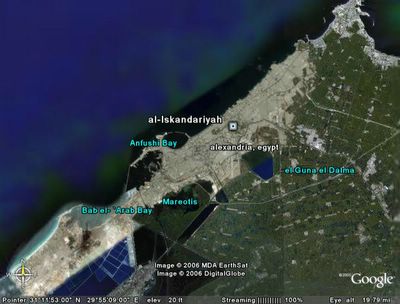
Alexandria


The city of Alexandria, Egypt was named after its founder, Alexander the Great, and was the seat of the Ptolemaic rulers of Egypt. It quickly became one of the greatest cities of the Hellenistic world second only to Rome in size and wealth throughout much of antiquity.

In ancient times, Alexandria was known for its lighthouse (one of the Seven Wonders of the World) and the Library of Alexandria (the largest library in the world).


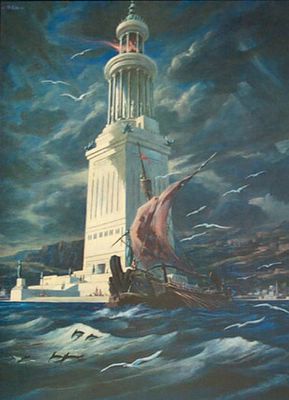
Lighthouse of Alexandria

Its tower is estimated to have been 134 m (440 ft) high, easily one of the tallest man-made structures on Earth at the time. Built out of blocks of white stone, the tower was made up of three stages: a lower square with a central core, a middle octagonal section, and, at the top, a circular section. At its apex was positioned a mirror which reflected sunlight during the day; a fire was lit at night.


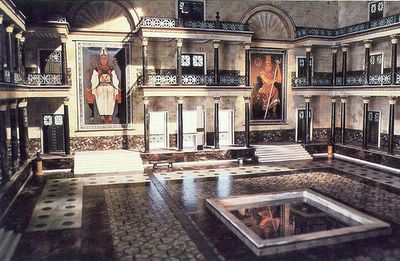
Library of Alexandria (depiction of the library from Carl Sagan's Cosmos)

The Royal Library of Alexandria in Alexandria, Egypt was once the largest library in the world. It is generally assumed to have been founded at the beginning of the 3rd century BC, during the reign of Ptolemy II of Egypt, after Ptolemy's father had raised what would become the first part of the library complex, the temple of the Muses, the Musaeum (where we get the museum from).

At its peak, the Royal Library is believed to have held anywhere between 40,000 to 700,000 books and was initially organized by Demetrius Phalereus. It has been reasonably established that the library was destroyed by fire yet, to this day, the details of the destruction or destructions remain a lively source of controversy.


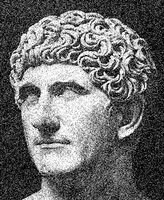
Mark Antony

Marcus Antonius (ca. 83 - 30 BC), known in English as Mark Antony, was a Roman politician and general. He was an important supporter of Julius Caesar as a military commander and administrator. After Caesar's assassination, Antony allied with Octavian and Marcus Aemilius Lepidus to form the second triumvirate. The triumvirate broke up in 33 BC and the disagreement turned to civil war in 31 BC, in which Antony was defeated by Octavian ttle of Actium and then at Alexandria.


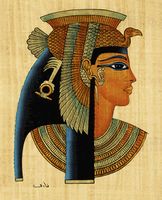
Cleopatra

Cleopatra VII (69 - 30 BC) was queen of ancient Egypt, the last member of the Ptolemaic dynasty and hence the last Hellenistic ruler of Egypt. Although many other Egyptian Queens shared the name, she is usually known as simply Cleopatra, and all of her similarly named predecessors have been mostly forgotten.

Antony committed suicide with Cleopatra in 30 BC.

Friday, December 30, 2005

WGBH (Great Blue Hill)


WGBH
is an established public television and public radio broadcast service located in Boston, Massachusetts. It operates over ten broadcasts: primarily WGBH 2 and WGBX 44 (television) and WGBH 89.7 FM (radio). WGBH is a member of PBS in regard to its television broadcasts, and both a member of NPR and an affiliate of PRI for its radio broadcasts. The license-holder is the WGBH Educational Foundation.

WGBH produces many shows for the above organizations, including nearly a third of PBS's national prime-time TV.

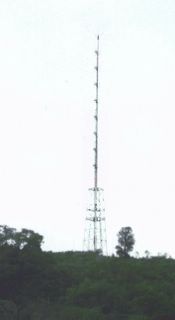
"GBH" stands for Great Blue Hill, the location of WGBH's FM transmitter, as well as the original location of WGBH-TV's transmitter. Great Blue Hill in Milton, Massachusetts, has an elevation of 635 feet (193 m) and is the highest point in the Boston area.


Blue Hill Ave.


WGBH Forum Network - Weekly Podcasts and New Downloads

Tuesday, December 13, 2005

Cocteau Twins, Elizabeth Frazer


"Hindsight is a wonderful thing. When the Cocteau Twins first emerged, they were compared to Siouxsie & The Banshees. In fact - as each of their records cumulatively proved - the Cocteau Twins never sounded like anything or anyone else. And, taken together, their nine albums, and 16 EPs/singles, sound less like a band and more like an element of nature. A freak of nature, even... Which was very 4AD."


Elizabeth Frazer - Vocalist of the Cocteau Twins

Elizabeth Frazer's unique vocal style and "lyrics" (or lack thereof) have been the centre of much debate.

After the breakup of Cocteau Twins in 1998, Elizabeth Fraser provided vocals for Massive Attack as well as Peter Gabriel's millennium project OvO.

She has subsequently contributed to the soundtracks of several films, most notably The Lord of the Rings: The Fellowship of the Ring, and has occasionally appeared as a guest artist on other musicians' projects.

In 2004, Fraser was invited to participate in an unique audio exhibit, "Shhh...", at London's Victoria and Albert Museum. Though she has released one white label recording called Underwater (which features a number of trance mixes of the title track) and has reportedly signed to Blanco y Negro Records, little is known about the progress of an officially released solo album.